Product Guides
Baklava mix for food service, explained
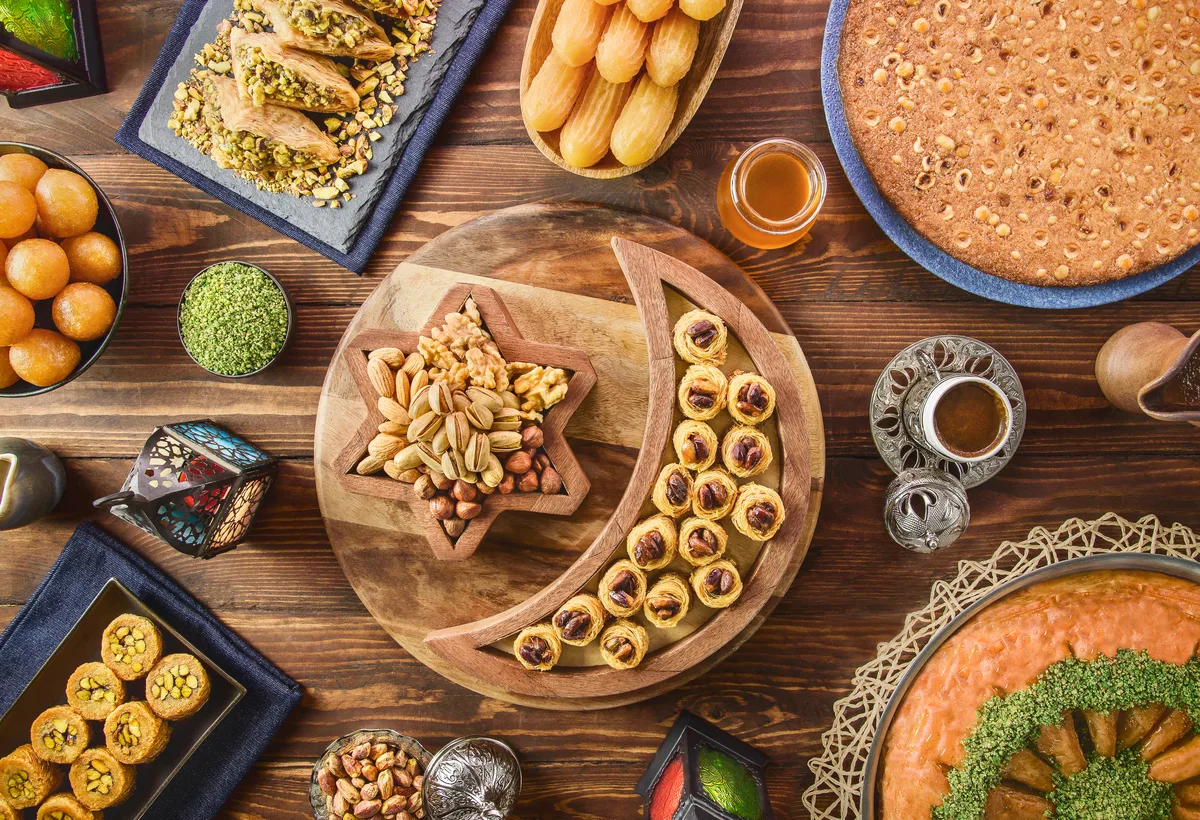
A "baklava mix" in the wholesale trade means an assorted retail box of Levantine baklava-style sweets — several shapes and fillings packed together rather than a single variety sold alone — built for a dessert counter, gift shelf or catering tray rather than a bakery making baklava from raw phyllo and syrup in-house. We carry one: Hamdan's Baklava Mix Sweets, in two real retail formats, 700 g and 450 g.
This guide covers what's actually in a mix like this, the two formats and how they differ, and how a GTA café, restaurant or grocer typically stocks and sells it.
The two formats we carry
Both are the same Hamdan mix at different scales rather than different products — the 700 g box suits a larger retail display, a gift table, or a catering order sized for a small event, while the 450 g box fits a smaller counter footprint or a lower-commitment gift purchase for a customer who's buying for themselves rather than a table of guests.
| Format | Item # | Best for |
|---|---|---|
| 700 g box | 61701 | Larger retail displays, gift boxes, catering trays |
| 450 g box | 61702 | Smaller counter displays, individual gift purchases, sampling |
What an assorted mix actually gives you on the counter
Where a single-variety box commits a customer to one shape and filling, an assorted mix does the selling for you — a shopper unfamiliar with Levantine sweets can pick up one box and get a genuine sample of several shapes and textures, from denser nut-filled pieces to lighter phyllo layers, rather than guessing which single variety to try first. That makes an assorted mix a strong first purchase for a customer new to the category, and a low-effort gift item for a customer who already knows the cuisine but doesn't want to choose between varieties.
For a café or restaurant, the same box works as a dessert-plate component — a piece or two alongside coffee — without requiring the kitchen to produce baklava in-house, which is a meaningful labour and equipment saving over making phyllo pastry from scratch.
Baklava mix vs. buying single varieties separately
A single-variety box makes sense once you know your customer base well enough to predict what sells — a shop with steady repeat traffic might stock a specific pistachio or walnut style alongside a mix once demand justifies the extra SKU. Starting out, though, an assorted mix carries less inventory risk: one box covers a range of tastes, so a new retailer or a restaurant testing a Levantine dessert offering for the first time isn't guessing which single variety to commit shelf space or menu real estate to before the data comes in.
The two-size range also gives some flexibility here that a single fixed size wouldn't: a restaurant testing a dessert-case addition can start with the smaller 450 g format to gauge interest, then move to 700 g boxes or a standing case order once the item proves itself on the menu.
Stocking and handling baklava mix at retail or on a menu
Baklava-style sweets are best displayed at room temperature, away from direct heat that can soften the pastry layers or melt the syrup coating into the box. For retail, a mix sells well merchandised near Arabic coffee or tea — the pairing is traditional and it reminds a browsing customer what to serve it with. For foodservice, portioning a box into individual pieces for a dessert plate or catering platter is straightforward since the mix already comes pre-cut to a consistent, ready-to-serve size.
Because Ramadan and Eid, along with the Christmas and Easter season for Levantine-Christian customers, are the two biggest seasonal spikes for baklava and other Levantine sweets, it's worth ordering ahead of both rather than reordering once shelves are already bare — case lead times matter most exactly when demand is highest.
Outside those peaks, baklava mix still moves steadily as an everyday gift and hospitality item — brought to a dinner, kept on hand for guests, or picked up alongside coffee at a café counter. A shop that treats it purely as a seasonal item risks empty shelf space the rest of the year; one that keeps a standing case on hand captures the steadier, less predictable demand in between the two big spikes.
It's also worth ordering baklava mix in the same inquiry as other Hamdan sweets and bakery lines rather than as a one-off — a mixed order consolidates delivery and gives you a single quotation to plan a whole dessert-case or gift-shelf refresh against, rather than reordering each line separately as it runs low.
Related questions
What's actually included in a baklava mix box?
An assortment of Levantine baklava-style sweets in different shapes and fillings, packed together in one retail box rather than sold as a single variety. It's built as a sampler and gift format, not a bulk single-item case.
What sizes does baklava mix come in?
We carry Hamdan's Baklava Mix Sweets in two sizes: a 700 g box (Item #61701) and a 450 g box (Item #61702), sized for larger displays and catering versus smaller counter or individual-gift purchases respectively.
How should baklava mix be stored and displayed?
At room temperature and away from direct heat, which can soften the pastry and melt the syrup coating. It merchandises well near Arabic coffee or tea, a traditional pairing that also prompts an add-on sale.
When should I order ahead for baklava demand?
Ramadan, Eid, and the Christmas and Easter season for Levantine-Christian customers are the two biggest seasonal spikes for baklava and Levantine sweets generally. Order ahead of both rather than reordering once a shelf is already bare.