For Grocers & Retailers
Halal grocery wholesale in the GTA: demand, certification and stocking the shelf
The GTA is one of North America's strongest halal grocery markets: the 2021 Census counted 626,010 Muslims in the Toronto CMA — roughly one resident in ten — with Mississauga at 120,965, about 16.9% of that city. Serving this market at wholesale means understanding one more thing clearly: in Canada, halal is verified by private certifiers, not defined by government, and a retailer's job is to know exactly which claim sits behind which product.
This guide covers the demand picture in numbers you can trust, how certification actually works here, and how to stock a halal-focused grocery through a quote-based importer without ever making a claim you can't document.
The demand, in numbers worth trusting
Statistics Canada's 2021 Census put the Toronto CMA's Muslim population at 626,010 — about 10.1% — with the City of Toronto at 9.6%, up from 6.7% in 2001, and Mississauga at 120,965. These are census figures, not marketing estimates, and they describe a customer base that is young, growing and concentrated exactly where GTA independents operate.
On the market side, Nourish Food Marketing valued Canada's halal food market at more than a billion dollars a year as of 2019, growing 10–14% annually — and found that 57% of halal shoppers felt mainstream chains didn't meet their needs (reported by NOW Toronto). That gap between demand and mainstream range is the independent halal grocer's entire business case.
| Geography | Muslim population | Share of population |
|---|---|---|
| Toronto CMA | 626,010 | ≈10.1% |
| City of Toronto | — | 9.6% (up from 6.7% in 2001) |
| Mississauga | 120,965 | ≈16.9% |
How halal certification works in Canada
Two facts anchor everything else. First, the Canadian government does not define halal and does not accredit halal certifiers — the CFIA's role is truth in labelling, not religious standards. Second, since April 4, 2016, any halal claim on a food label, package or advertisement must name the certifying body behind it (CBC News, 2016). A bare 'halal' sticker with no certifier named does not meet the rule.
Certification itself is done by private bodies, each with its own standards and audit practices. The names GTA retailers see most are the Halal Monitoring Authority (HMA, established 2004), ISNA Canada (certifying since 1988) and IFANCC. Some of your customers care deeply about which certifier stands behind a product, so know the answer per SKU. This is general guidance, not legal or religious advice — confirm specifics with the CFIA and the certifier. The fuller picture is in halal certification in Canada.
The retailer's verification discipline
The stores that keep their community's trust all run the same quiet routine:
- Verify per product, per supplier, in writing. Category-level assumptions — 'all of brand X is halal' — are how shelves end up mislabelled. How to confirm a product is halal-certified walks through the steps.
- Check that the label names the certifier. The 2016 rule makes that the baseline for any packaged claim you resell.
- Keep the paper. Certification letters and lot documentation belong in a folder you can open when a customer — or an inspector — asks.
- Don't extend claims. A certified product doesn't certify your shelf sign, your deli counter or the products beside it. Handling products without a certificate honestly is part of the same discipline.
- Expect the same standard from suppliers. We take that line ourselves: the catalogue makes no product-specific certification claims — ask with your inquiry and we confirm what documentation exists for each product.
Stocking the halal-focused pantry
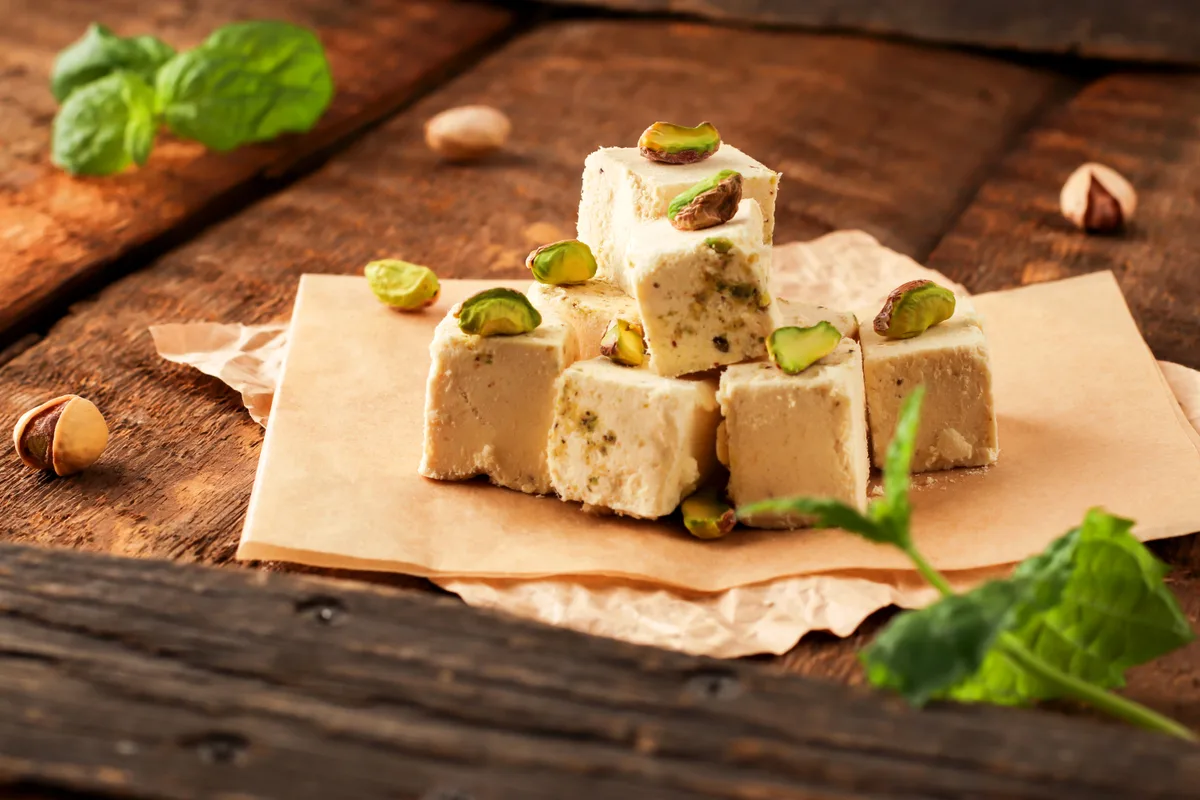
Most of a halal grocery is pantry, and most of the Levantine pantry is plant-based: spices and blends, za'atar, olives and pickles, tahini and halawa, preserves and coffee carry none of the slaughter-certification complexity that meat does. The discipline still applies wherever you put an explicit halal claim on the shelf — gelatine-containing sweets and dessert mixes are the classic case to check product by product rather than assume.
The buying mechanics are the standard quote-based rhythm of this category: build one inquiry across categories, send it, and a written quotation comes back within about a business day — see how inquiry ordering works. Plan the year around the season when this market's buying concentrates: the Ramadan retail calendar covers the windows, and the wider distributor guide covers category depth for the other eleven months.
Related questions
Does the CFIA certify halal products?
No. The CFIA neither defines halal nor accredits certifiers — certification is done by private bodies such as HMA, ISNA Canada and IFANCC. What the CFIA does require, since April 2016, is that any halal claim on a label or ad name the certifying body behind it.
Can I put a 'halal' sign on a shelf section myself?
Only with per-product verification behind it. The labelling rule covers packages and advertising, and a shelf sign is a claim your customers will treat the same way — keep the certification documentation for every product under the sign, and leave uncertified products outside it.
Which halal certifiers will my customers recognize?
In the GTA, the Halal Monitoring Authority (HMA), ISNA Canada and IFANCC are the most visible names. Preferences differ between communities and even families, so knowing which certifier stands behind each product serves you better than any blanket answer.