Product Guides
Olives of the Levant and Anatolia: varieties, curing and how to buy them
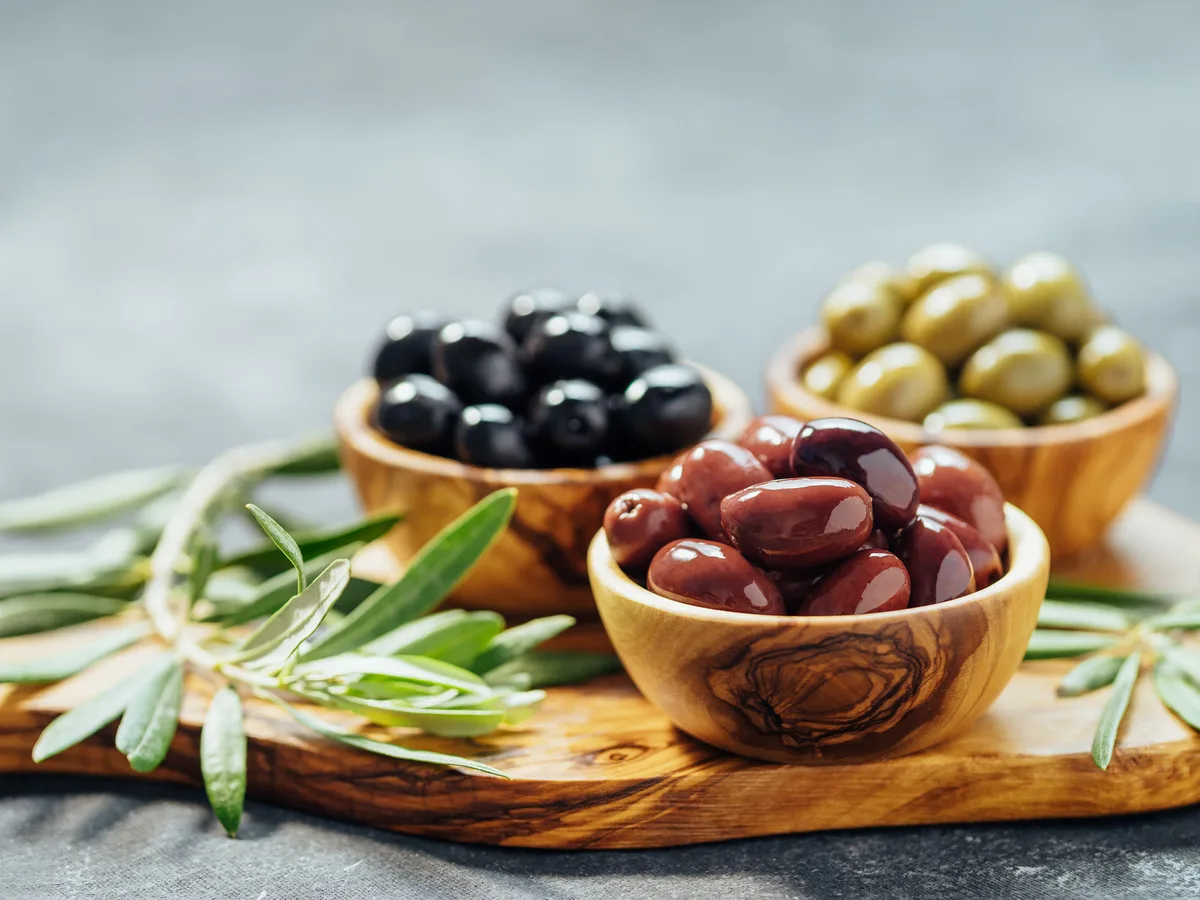
Levantine and Anatolian olives are cured, not raw — table olives are always processed to remove the natural bitterness of fresh-picked fruit, through brining, dry-salt curing, or lye treatment, and the method used shapes the final texture and flavour as much as the variety does. Our catalogue spans both traditions: Zer olives from Türkiye's Gaziantep region, packed in tins, vacuum bags and glass jars, and Lio's Green Olives Salkini from Syria's Latakia coast, packed in glass.
The two questions buyers ask most are what actually separates black from green olives, and which packing format — glass, tin, or vacuum — suits their operation. Both questions have straightforward answers once you know what to look for on the label and in the jar.
Black vs. green isn't a variety — it's ripeness
Colour in table olives usually comes down to when the fruit was picked, not a different olive tree. Green olives are picked unripe, firmer and more assertively bitter before curing tames them; black olives are left to ripen fully on the tree (or are oxidized in some commercial processes), giving a softer texture and milder, less sharp flavour. Kalamata — a specific Greek varietal, not a catch-all term for 'dark olive' — is often used loosely at retail to mean any deep-purple, brine-cured olive, but a genuine Kalamata is a distinct cultivar; our Zer Black Olives and Sliced Black Olives are Anatolian black olives, not Kalamata, and worth describing accurately on a menu or shelf tag.
Curing and packing: what glass, tin and vacuum each mean for you
| Format | Example | Best for |
|---|---|---|
| Glass jar | Zer Sliced Black Olives, Zer Sliced Green Olives, Lio Green Olives Salkini | Retail shelf display, brine visible to the customer |
| Tin | Zer Light Black Olives | Storeroom stacking, longer unopened shelf life |
| Vacuum pack | Zer Black Olives | Compact storage, less brine weight to ship and store |
Handling brine once a container is opened
Olives are packed in a brine or oil that isn't just filler — it's what keeps them from drying out and off-flavouring once opened. Once a jar, tin or vacuum pack is opened in a working kitchen, keep the olives submerged in their own brine (topping up with a light salt brine if needed) and refrigerated; olives left exposed to air dry out and pick up off-flavours within days rather than weeks. For a retail shelf, glass jars that show the brine level clearly help customers judge freshness at a glance, which is part of why glass sells better than tin for a shelf-facing olive. An unopened tin or vacuum pack, by contrast, holds considerably longer in a dry storeroom — which is exactly why those formats suit back-of-house stock rather than a display shelf, where the customer never sees the unopened package to begin with.
Cross-merchandising olives on a shelf or menu
Olives rarely sell as a standalone destination purchase — they sell alongside the things they're eaten with. A shelf that places olives near cheese, preserves, and olive oil invites the kind of small basket-building purchase that a single olive facing tucked in a generic canned-goods aisle doesn't. In a restaurant setting, olives belong on a mezze spread, tucked into a salad, or set out as a table starter — a role that rewards a supplier who can hold both a milder green and a fuller black side by side so a kitchen can offer contrast on the same plate rather than a single note.
Levantine vs. Anatolian: two traditions, one shelf
Syria's coastal groves and Türkiye's Gaziantep region both sit within the same broader eastern Mediterranean olive belt, but the finished products lean different: Gaziantep production, reflected in Zer's range, runs heavily toward classic sliced and whole black and green olives in tin, vacuum and glass. Lio's Salkini from Latakia represents the Syrian coastal style in a large-format 1300 g glass jar built for foodservice volume as much as retail. Stocking both gives a shelf or kitchen genuine regional range rather than a single-source olive line.
Related questions
What's the difference between Kalamata and green olives?
Kalamata is a specific Greek varietal, typically dark purple and brine-cured with a distinct almond shape. 'Green olive' isn't a variety at all — it describes any olive picked unripe before curing, and can come from many different cultivars, including the ones in our catalogue. Menu and shelf copy that says 'Kalamata-style' rather than 'Kalamata' is the honest way to describe a similar but non-Kalamata dark olive from a different origin.
Are black and green olives different plants?
Usually not — colour mostly reflects ripeness at harvest (green picked early, black left to ripen) rather than a different tree, though curing method also shapes the final colour and texture in the finished jar.
How should opened olives be stored in a kitchen?
Keep them submerged in their own brine and refrigerated once opened; olives exposed to air dry out and lose flavour within days. Top up with a light salt brine if the liquid runs low before the container is finished.
Which packing format should I buy — glass, tin or vacuum?
Glass suits retail shelves where customers judge freshness by sight; tin suits storeroom stacking and longer unopened shelf life; vacuum packs are compact and efficient for kitchens working through volume without needing shelf display. Many operators stock more than one format — glass for the counter, tin or vacuum for back-of-house — rather than choosing a single format for everything.