Product Guides
Tomato paste for the trade: glass jars vs. tins, and which to buy
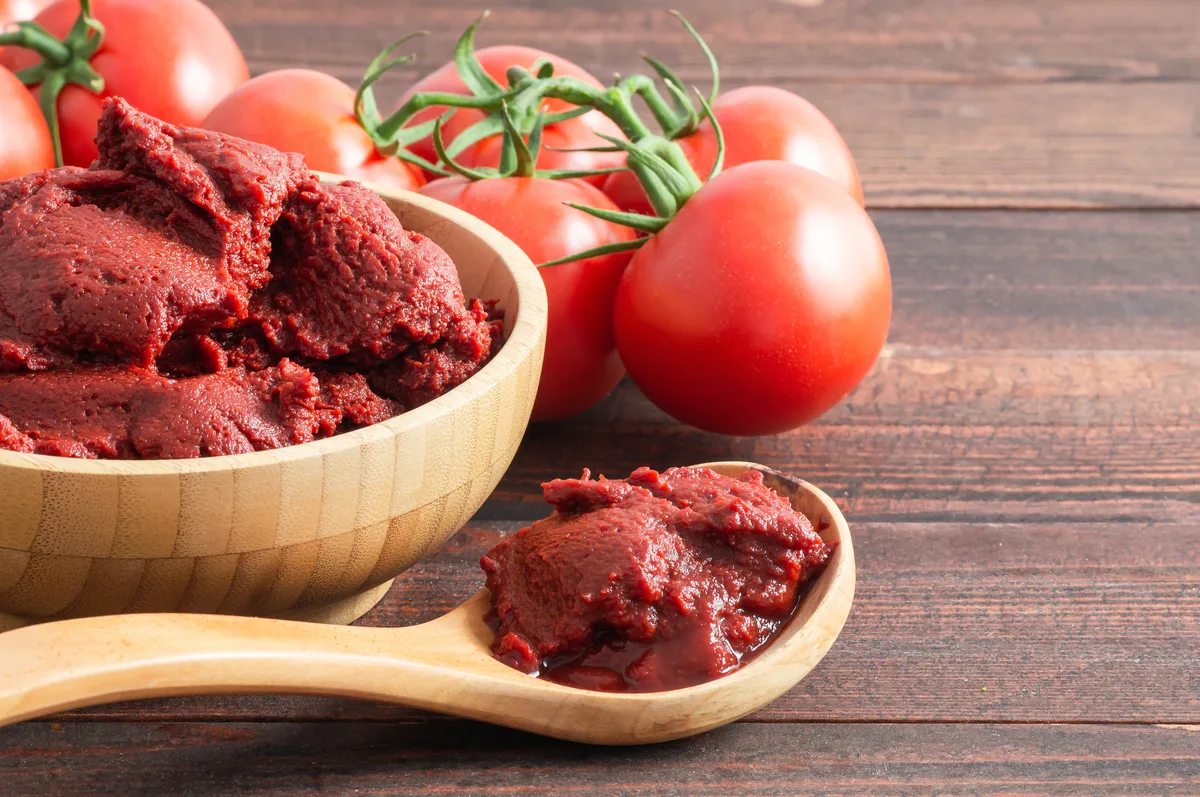
Glass and tin are both good containers for tomato paste — the choice is less about quality and more about what your kitchen or shelf actually needs: glass shows the product and reseals cleanly for partial use, while tin ships lighter, stacks denser, and scales to genuinely large formats for a busy line. We carry both: Lio Tomato Paste from Syria in glass, across four sizes, and Zer Tomato Paste from Türkiye in tins, up to 4.5 kg.
This guide compares the two formats directly, with the real pack sizes each supplier offers, so you can match the container to how your kitchen actually portions and stores.
Glass vs. tin, format by format
Lio's glass range runs from a 360 g jar suitable for a small kitchen's weekly use up to a 3070 g jar that still comes with a resealable lid — useful anywhere the paste gets used a spoonful at a time rather than emptied in one go. Zer's tin range starts similarly at 400 g but scales to a 4.5 kg tin, sized for a high-volume kitchen that goes through paste by the case and doesn't need to reseal a partial container between services.
| Supplier | Container | Sizes available | Case pack |
|---|---|---|---|
| Lio (Syria) | Glass jar | 360 g, 635 g, 1375 g, 3070 g | x12, x12, x6, x4 |
| Zer (Türkiye) | Tin | 400 g, 800 g, 4.5 kg | x24, x12, x3 |
Why a kitchen picks one format over the other
Glass wins where the paste is portioned out slowly — a café doing small-batch sauces, a grocer selling it as a retail line where a customer wants to see the product and reseal the jar at home, or any kitchen that opens a container and doesn't finish it in one service. It's also simply easier to gauge remaining stock by eye through glass, which matters for a prep cook doing inventory mid-shift.
Tin wins on density and top-end volume. A 4.5 kg tin is a genuinely different scale of purchase from a 360 g jar — it suits a restaurant or catering kitchen running sauces and stews daily, where the paste is decanted into a working container immediately on opening rather than served from the original tin. Tins also travel and stack more efficiently by weight, which shows up in delivery and storage footprint on a busy line.
Matching pack size to service volume
The mistake to avoid isn't choosing the wrong material — it's choosing the wrong size within the right material. A café or small kitchen that orders Lio's 3070 g jar because it looks like better value per gram, then struggles to use it before it fades in the walk-in, hasn't actually saved anything; a smaller 635 g or 1375 g jar reordered more often keeps the product fresher and the case turning over at a pace that matches real usage. The same logic applies to Zer's tins: a 4.5 kg tin only makes sense once your kitchen's weekly draw genuinely supports it.
As a rough planning guide, a shawarma or grill restaurant making sauces and marinades daily will work through paste quickly enough to justify the larger end of either range — Lio's 3070 g jar or Zer's 4.5 kg tin. A café or small grocer using it occasionally, or reselling it retail by the jar, is better served by the smaller formats on both lists, even if the per-kilogram case cost looks less efficient on paper.
Handling and storage once a container is open
Once opened, tomato paste — glass or tin — should move to a sealed, non-reactive container if it isn't going to be used within a day or two; tin in particular shouldn't sit open and in contact with its own metal for extended storage. Refrigerate after opening, and portion into smaller working containers if your kitchen only draws a spoonful at a time, so the bulk of the case stays sealed and fresher for longer.
For planning purposes, treat the format decision as a volume question first: if you can reliably use a 3–4.5 kg container within a normal reorder cycle, tin's density and scale make sense; if a case sits in the walk-in being drawn down slowly, glass's reseal is worth the extra weight and cost per kilogram.
It's also worth stocking both origins for different roles rather than picking one supplier exclusively: Lio's Syrian-made paste suits a kitchen that wants glass across the board, while Zer's Turkish-made paste suits one that's standardized on tins for its whole sauce program. Either is a genuine, additive-free paste rather than a diluted imitation, so the decision really does come down to format and volume rather than one being a lesser product.
Related questions
Is glass or tin tomato paste better quality?
Neither container affects the paste's quality on its own — both are standard, food-safe packaging for this product. The choice comes down to how your kitchen portions and stores it: glass reseals cleanly for partial use, tin scales to larger, denser formats.
What's the largest tomato paste format you carry?
Zer's tin range goes up to 4.5 kg (case of 3), sized for high-volume kitchens. Lio's glass range tops out at 3070 g (case of 4) with a resealable lid for kitchens that prefer to see and reseal the product.
How should tomato paste be stored once opened?
Move it to a sealed, non-reactive container if it won't be used within a day or two, and refrigerate. Portioning into a smaller working container keeps the rest of a large case fresher for longer between uses.