Soap & Natural Care
Real vs fake Aleppo soap: how to tell the difference
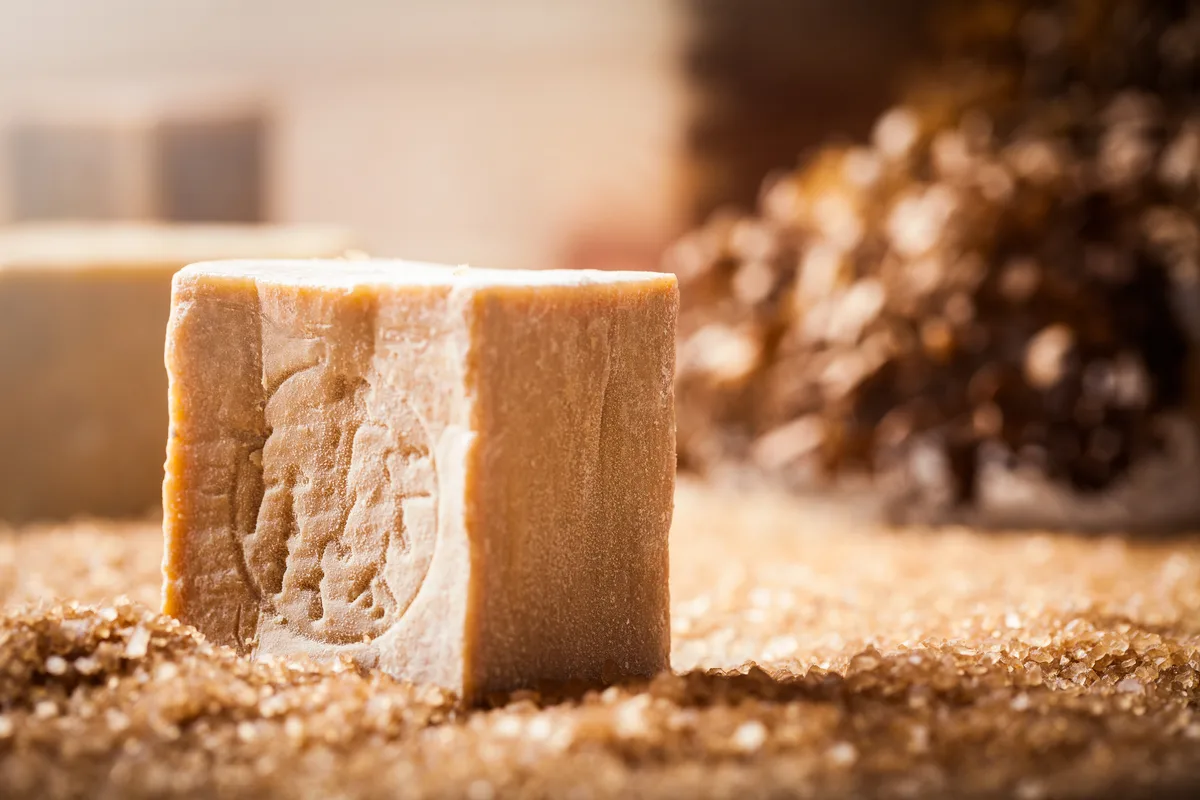
Genuine Aleppo soap gives itself away in four places: a short ingredient list built on essentially olive and laurel oil, a gold-brown crust wrapped around a green core, a maker's hand-stamp pressed into the bar, and a named soap house standing behind it. A bar missing all four — bright white, heavily fragranced, unstamped, sold with no producer named anywhere — isn't the traditional product, whatever the label claims.
None of this requires lab equipment. It's a checklist a buyer can run through before placing a first order, and one worth teaching any staff who restock a soap shelf. Here's what to look for, signal by signal.
Check the ingredient list first
Traditional Aleppo soap is made from olive oil and laurel oil, saponified with water and an alkali — a short list, because there's little else in the recipe. Genuine bars keep that list short; imitations tend to pad it with synthetic fragrance, added dye, sulfates, or list olive oil far down a longer chemical panel rather than at the top. Our Barakat range keeps to the traditional two-oil recipe across all 23 bars.
If a supplier can't tell you what's actually in a bar, or the ingredient story keeps changing between products, treat that as a warning sign rather than a detail to skip past. A genuine house can usually describe its recipe in one sentence; a reseller repackaging someone else's stock often can't.
Look at the cut face: gold-brown crust, green core
A genuine cured bar oxidizes to gold-brown on the outside while the laurel-rich interior stays green — the classic two-tone cut face collectors and retailers photograph. That contrast is a sign of proper curing, not a defect; see why Aleppo soap is green inside for the short version to repeat to customers.
A bar that's uniformly white or pale throughout, with no colour difference between surface and interior, usually hasn't been through the traditional laurel-oil process at all.
Find the maker's stamp
Every genuine bar carries a hand-pressed stamp — the producer's family name worked into the soap while it's still soft, before curing. It's the closest thing this category has to a label, which is why buying from a named house matters more here than almost anywhere else in a personal-care range. Compare an everyday stamped bar like Nader Barakat B5 against an unstamped 'olive laurel soap' with no producer attached, and the difference is obvious the moment you turn either one over.
Bulk cartons sold by net weight, like janat alghar A120, still carry the stamp on every individual bar inside — the format changes, the mark doesn't.
Treat 'floats vs sinks' as one data point, not a test
You'll see buying guides claim genuine Aleppo soap floats in water while imitations sink, or the reverse. In practice, density depends on how long a bar has cured and its exact laurel content, so behaviour in water varies bar to bar even among genuine ones. It's worth noting, but weight it far below the ingredient list, the stamp and a named producer — those three are far more reliable than a bathtub test.
Why imitations exist in the first place
Aleppo soap's reputation is exactly why it attracts imitation. 'Aleppo-style' or 'laurel soap' on a label doesn't guarantee the traditional two-oil recipe, the hand-stamping or the months-long cure — those words describe a category, not a specific producer's process, so they can legally appear on a bar that shares none of the actual craft. That's not unique to soap; it's the same reason 'Parmesan-style' cheese and genuine Parmigiano-Reggiano share a shelf without being the same product.
The practical takeaway for a buyer is to stop reading category words as a guarantee. 'Aleppo-style' tells you what the bar is trying to resemble; a named producer and a visible stamp tell you what it actually is.
Buy the story, not just the bar
The fastest way to buy correctly at wholesale is to buy from a house that will put its name on the invoice as well as the bar. Nader Barakat & Sons has worked in the Aleppo tradition since 1979, and the full range sits under Aleppo soap with every bar named and stamped. For the fuller background on the craft itself, start with Aleppo soap: history, craft and the laurel tradition; for sourcing mechanics, see Aleppo soap wholesale in Canada.
Related questions
Does real Aleppo soap always float in water?
Not reliably — density varies with cure time and laurel content, so some genuine bars float and some don't. Use it as a minor clue at most, and rely on the ingredient list, the stamp and a named producer instead.
Why is the soap green inside but brown outside?
The surface oxidizes to gold-brown as the bar cures in open air, while the laurel-rich interior stays green underneath. It's the classic mark of a genuinely cured bar, not a sign anything is wrong.
Is a strong, sweet fragrance a red flag?
It can be. Traditional Aleppo soap's scent comes from the laurel oil itself, which is earthy and mild rather than sweet or perfume-strength. A heavily fragranced bar often signals fragrance oil added on top of, or instead of, the traditional recipe.
What's the safest way to buy authentic bars wholesale?
Buy from a soap house that names itself on the product, not just an importer's brand. Ask who stamps the bar, confirm the two-oil ingredient list, and expect the stamp to be visible in product photos before you commit to a case.