Soap & Natural Care
Aleppo soap: the history, the craft and the laurel tradition
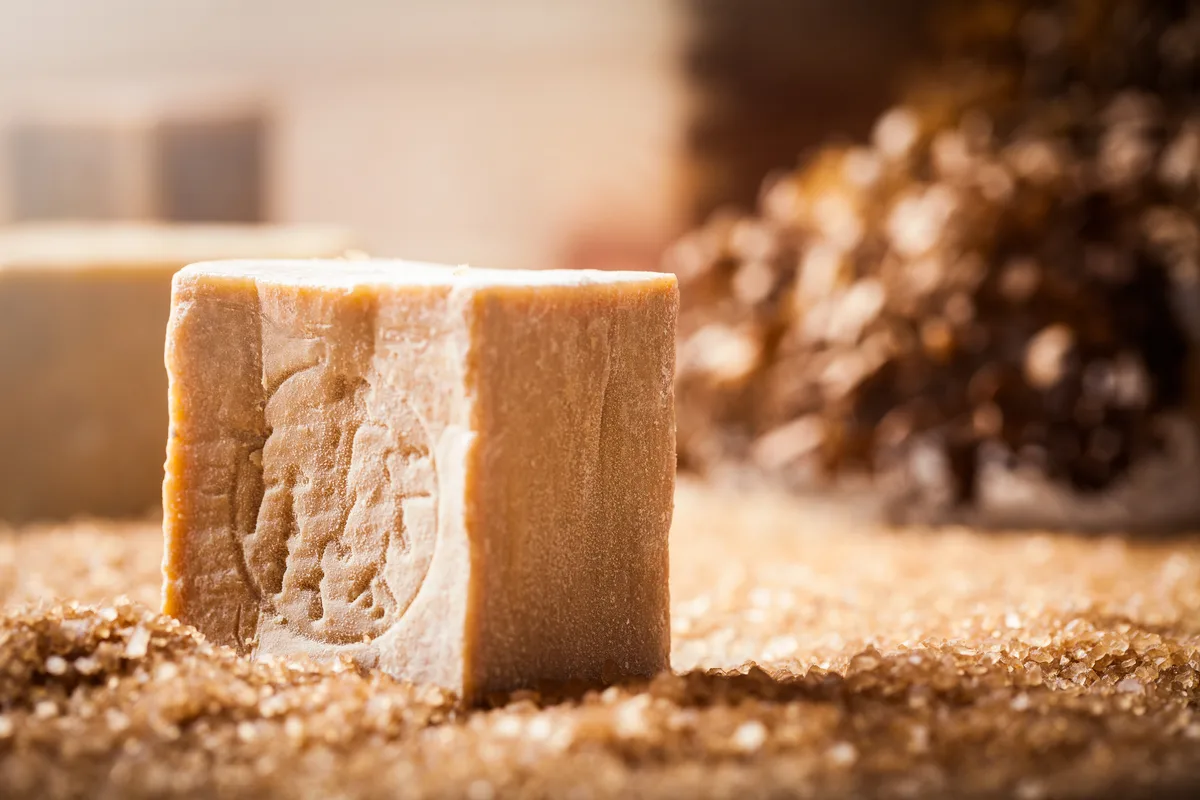
Aleppo soap is a hard bar soap made from just two oils — olive and laurel — cooked, poured, cut and hand-stamped by craftsmen, then air-dried for months until the surface turns gold-brown around a green, laurel-rich core. The craft is old enough that UNESCO inscribed it on its Representative List of Intangible Cultural Heritage in December 2024, describing a tradition of roughly 3,000 years (UNESCO, 2024).
We import 23 of these soaps from Nader Barakat & Sons, a family house that has worked in the Aleppo tradition since 1979 and now produces from Gaziantep, Turkey, carrying the craft forward from Aleppo itself. This guide covers what the soap is made of, how it's actually made, what the maker's stamp means, and where laurel content and aging fit in — the background the rest of this series builds on.
Two oils, one name: metraf and ghar
The base of Aleppo soap is olive oil — metraf in the local vocabulary — saponified into a mild, dense soap. Laurel oil, pressed from the berries of the bay laurel tree and known as ghar, is worked into that base at a percentage the producer chooses. UNESCO's 2024 inscription describes the craft precisely: olive and laurel oil brewed together, the setting soap traditionally cut by craftsmen working in wooden shoes, each bar hand-stamped with a family name, then dried for six to nine months before it's fit to sell (UNESCO, 2024).
It's worth separating laurel oil from laurel leaf, which shows up elsewhere in a Levantine pantry as a cooking herb — our laurel leaf is the same tree's leaves, used whole in stews and rice, a different part of the plant entirely from the pressed berry oil that goes into soap.
How a bar actually gets made
The oils are cooked with water and an alkali into a thick soap paste, poured out flat while still soft, and cut into blocks or bars while the surface is workable. Each bar is then stamped by hand — the maker's name pressed into the still-soft soap — before the real work begins: months of open-air curing on wooden racks, turned periodically, until the surface fully oxidizes to its familiar gold-brown while the laurel-rich interior stays green.
That curing period isn't a formality. It's what turns a soft, freshly-made soap paste into the hard, long-lasting, mild bar the category is known for — which is also why genuine Aleppo soap tends to come from houses willing to name a producer and a process, not a generic import with no maker behind it.
The stamp is the label
Because Aleppo soap has so few ingredients, the maker's hand-stamp does the job a long ingredient panel does everywhere else — it tells a buyer exactly who stands behind the bar. Our range runs from everyday stamped bars like Nader Barakat M002 to the flagship Ghar Kasab laurel soap with virgin olive oil, every one carrying the Barakat name.
Knowing what the stamp, the crust and the core are supposed to look like also protects a buyer from imitations sold without any of the three — see real vs fake Aleppo soap for the specific signals to check before a first order.
Laurel content: the one variable buyers ask about
Beyond the maker, the other question buyers ask most is laurel percentage — it drives scent, the depth of the green core, and where a bar sits between everyday and premium on a shelf. There's no official standard for the figure, so it's always a producer's own declaration rather than a regulated grade. We cover the practical range and what it means for retail in laurel oil percentages in Aleppo soap, explained.
From Aleppo to Gaziantep to a Canadian shelf
Nader Barakat & Sons has worked in the Aleppo tradition since 1979, and production today runs from Gaziantep, Turkey, exporting the same handmade, hand-stamped, long-cured soap the craft has always produced — carried across a border, the way many Aleppo soap houses have moved. The full 23-bar range sits under Aleppo soap in our catalogue, quoted by inquiry rather than list price like everything else we import.
Because the soap is shelf-stable and genuinely improves with age, storage and display are simpler than for almost anything else on a personal-care shelf — see storing and displaying Aleppo soap at retail for the specifics once a case lands.
What a first order typically includes
Buyers new to the category rarely commit heavily to one bar. A more common first inquiry mixes two or three stamped bars from different tiers — an everyday bar, a laurel-forward premium bar, and sometimes a scented specialty line — alongside a single bulk carton if the store plans a refill display or basket. That spread does two things at once: it gives customers a genuine choice on day one, and it tells the retailer, from what actually sells, where to put the next order's weight.
Comparing soaps side by side also makes the tradition easier to explain. A customer who can smell an olive-forward bar next to a laurel-forward one understands the range in seconds, in a way no shelf card alone achieves.
Related questions
What is Aleppo soap actually made of?
Olive oil and laurel (bay laurel berry) oil, saponified together, with no synthetic fragrance or colour in the traditional recipe. The exact laurel percentage is set by the producer and stated on the bar or its packaging.
Is Aleppo soap still made in Aleppo?
Many houses that trace their craft to Aleppo, including Nader Barakat & Sons, now produce from Gaziantep, Turkey, while keeping the same handmade, hand-stamped, long-cured method UNESCO recognized in 2024. The tradition travelled with the makers.
How can I tell if a bar is genuine before I stock it?
Check for a hand-stamp, a short two-oil ingredient story, and a named soap house standing behind it. Our guide to real vs fake Aleppo soap walks through the specific signals in detail.