Sourcing & Wholesale
Halva (halawa) wholesale in Canada: formats, quality signals and sourcing
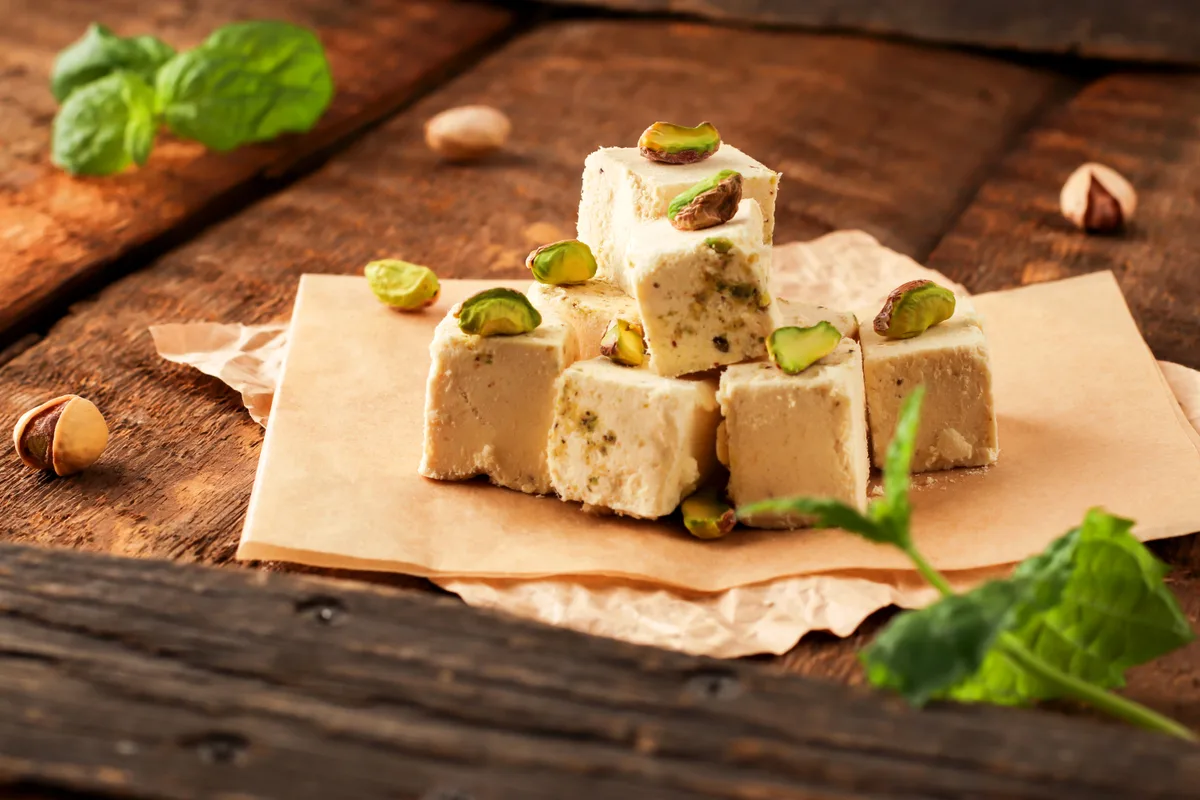
Buying halva wholesale in Canada starts with one decision: sesame halawa from a named producer, in a format your counter can actually sell. Our stocked line is Srour Halawa with Pistachio in an 800 g tub, made by Ibrahim Srour Est., a Jordanian house working to a Damascus tradition — quoted by inquiry, typically within a business day. Other flavours and larger catering formats are sourced on request through the house rather than held as stock.
Halawa — halva in most Canadian retail spelling — is the Levant's great sesame sweet: dense, crumbly and long-keeping, sold by the tub, the slice or the block. This guide covers what it is made of, why the pistachio tub is the working format for most buyers, the quality signals that separate good halawa from cheap, and how storage and allergen practice keep the category clean.
What halawa is made of
Proper sesame halawa is tahini — ground sesame paste — worked with hot sugar and whipped with a natural foaming root (soapwort, the traditional 'erq al-halaweh) until it sets into that unmistakable fibrous, melting crumb. Pistachio is the classic addition; the nut's colour and richness against the pale sesame body is the category's signature look.
The distinction that matters at wholesale is sesame versus semolina styles: Levantine and Damascus-tradition halawa is sesame-based, while Greek and some Balkan halvas are semolina puddings — different products sharing a name. If your customers are Levantine, Turkish, Iraqi or Persian, sesame halawa is the one they mean. For the fuller story, see our halva guide.
The stocked line: Srour pistachio halawa, 800 g
The 800 g pistachio tub is the format most Canadian counters actually need: large enough for a deli to slice from or a household to host with, small enough to turn over fresh, and shelf-stable throughout. Srour is a producer whose name carries weight with Damascus-tradition buyers — and in this category, the producer's name on the tub is half the sale.
Around the stocked tub, the wider halawa family — plain, chocolate-marbled, single-serve and food-service blocks — is sourced on request through our supplier houses. State the format and volume in your inquiry and the quotation will say plainly what is available and when; the mechanics are covered in requesting products we do not list.
Cafés are quietly one of the best halawa channels in the country: a slice on a plate beside cardamom coffee is a traditional pairing that costs seconds of labour, and crumbled halawa over yogurt bowls, French toast and soft-serve has moved from Levantine kitchens onto mainstream brunch menus. One shelf-stable tub covers weeks of that service — the kind of margin arithmetic small operators like.
Formats across the trade, and who each suits
Halawa sells in four working formats. Only the first is held as stock; the rest are inquiry lines — the table keeps the distinction honest.
| Format | Availability with us | Best fit |
|---|---|---|
| Retail tub, 800 g (pistachio) | Stocked — Srour line | Grocers, delis, cafés; hosting purchases |
| Plain and flavoured retail tubs | On request through supplier houses | Stores wanting a two-facing halawa set |
| Deli blocks for slicing | On request through supplier houses | Full-service deli counters selling by weight |
| Food-service and catering formats | On request through supplier houses | Bakeries and kitchens using halawa as an ingredient |
Quality signals when comparing quotes
Halawa quality lives in the sesame. When comparing suppliers, a few questions and one taste tell you most of what matters.
- Sesame first on the ingredient list — the tahini share drives flavour and texture; ask the producer to state it.
- Texture: fine, layered crumb that slices cleanly and melts on the tongue — not waxy, not sandy.
- Pistachio density: nuts should be visible through the cut face, not scattered on top for show.
- Honest oil behaviour: a little sesame oil weeping at the surface is normal for a natural product, not a defect.
- A named producer and tradition on the tub — anonymous halawa is the category's commodity end.
Storage, shelf life and allergens
Halawa is one of the lowest-maintenance items on a Levantine shelf: it needs no refrigeration, holding its texture best in cool, dry storage away from direct sun — refrigeration can actually harden the crumb. Check best-before markings on arrival, rotate first-in, first-out, and keep sliced deli portions wrapped tightly so they do not dry.
One compliance note carries the category: sesame is a priority allergen in Canada, and halawa is essentially concentrated sesame, usually with tree nuts alongside. Keep supplier ingredient documentation on file and make shelf and deli labels explicit — Food Allergy Canada's sesame page is the primary reference worth bookmarking for staff.
Ordering follows the catalogue's standard model: add the tub — and anything else from the sweets range — to one inquiry with case quantities, and one written quotation comes back, typically within a business day. Shelf-stable cases quote well across Canada, with delivery throughout the GTA.
Related questions
Does halva need refrigeration?
No — sesame halawa is shelf-stable and keeps best cool, dry and out of the sun. Refrigeration tends to harden the crumb; wrap cut portions tightly instead and rotate stock first-in, first-out.
What is the difference between halva and tahini?
Tahini is plain ground sesame paste; halawa is tahini cooked with sugar and whipped until it sets into a sliceable sweet. Same seed, different products — one is an ingredient, the other a finished confection.
Can I get plain halawa or catering blocks, not just the pistachio tub?
Yes — the pistachio 800 g tub is the stocked line, and other flavours and food-service formats are sourced on request through our supplier houses. State format and volume in your inquiry and the quotation confirms availability.