Product Guides
Halva (halawa), explained: how tahini becomes the Levant's sesame sweet
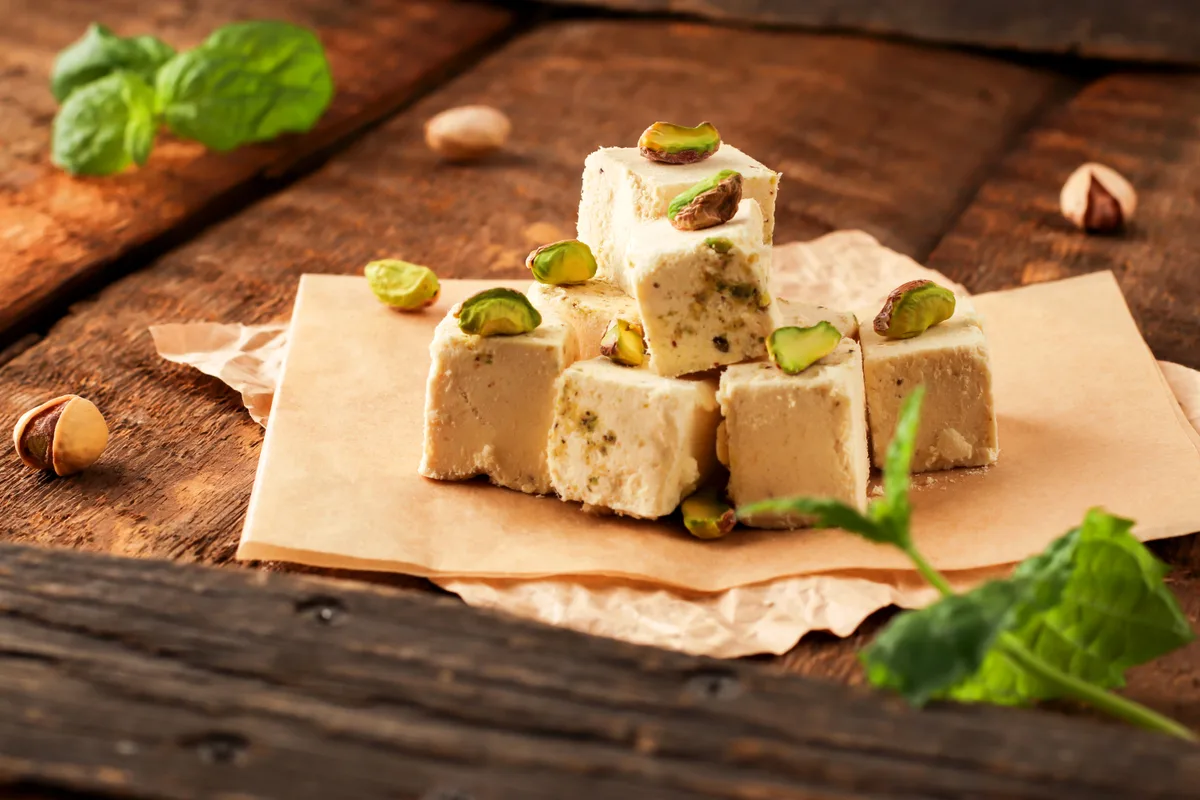
Halva — halawa in Arabic, and both spellings are used interchangeably across the trade — is a dense, flaky confection built by whipping hot sugar syrup into tahini until it sets into a sliceable block. In its classic Levantine form it's plain or studded with pistachio; ours comes from Ibrahim Srour Est., a Damascus-tradition house, as Halawa with Pistachio in an 800 g format built for a deli counter or bakery case.
The two things buyers usually ask about halva are what actually sets it apart from tahini, and whether it needs refrigeration at retail. Both come down to the same fact: halva is tahini transformed by sugar and mechanical whipping, not tahini with sugar simply stirred in. That distinction matters for stocking decisions too — one is a savoury pantry ingredient bought by the jar, the other a finished sweet bought by the slice or the box.
What halva is made of
Sesame halva starts as tahini — ground sesame paste — combined with a hot sugar or glucose syrup, often with a natural whipping agent (traditionally root extract from soapwort, sometimes egg white in modern production) that traps air as the mixture is beaten. The whipping is what gives halva its signature flaky, almost fibrous crumb rather than a smooth fudge texture. Once whipped, it's poured into moulds and left to set and cool before slicing or blocking for retail.
Sesame halva vs. semolina halva — not the same dessert
'Halva' names two different desserts in different food traditions, and confusing them leads to the wrong expectation at the counter. Sesame halva — the Levantine and Eastern Mediterranean version, and the one this guide and our catalogue cover — is built from tahini and sugar, dense and flaky. Semolina halva is a wheat-semolina pudding cooked with ghee, sugar and milk or water in South Asian and some Egyptian kitchens — soft and spoonable, not sliceable. The two share a name purely by historical accident of translation, not a shared recipe, so if a customer asks for halva, confirm which tradition they mean before you quote — a grocer stocking both should shelve them separately and label each clearly rather than let the shared name cause a mix-up at the register.
Halva vs. tahini: what actually separates them
| Tahini | Halva (sesame) | |
|---|---|---|
| What it is | Ground sesame paste, single ingredient in a good jar | Tahini whipped with hot sugar syrup into a set block |
| Texture | Smooth, pourable | Dense, flaky, sliceable |
| Use case | Ingredient — hummus, dressings, baking | Finished sweet — deli counter, gift boxes, dessert plating |
| Sugar content | None in plain tahini | Significant — it is a confection, not a paste |
Flavours, and where halva shows up on a menu
Plain and pistachio are the anchor flavours in Levantine halva, with chocolate-marbled and other novelty styles more common in wider retail; Srour's Halawa with Pistachio sits squarely in the classic camp rather than a novelty one. Beyond the deli slice, halva has found a second life on café and bakery menus — crumbled into granola for texture and sweetness, folded into babka or swirled through croissant dough for a filling with more bite than a standard pastry cream, or simply plated alongside coffee as a dessert course in its own right. For an operator already running a Levantine-leaning menu, halva is an easy single ingredient to extend into two or three menu lines rather than one retail slice.
Buying and holding halva at retail
Halva is shelf-stable, not a refrigerated item — high sugar content and low moisture keep it safe at room temperature in its wrapped block, the same way it's traditionally sold from open trays in Damascus and Aleppo markets. Once cut, wrap the exposed face tightly; halva dries and can develop a harder, crumblier edge if left open to air, which is a texture problem rather than a safety one. Srour's Halawa with Pistachio ships as an 800 g block sized for a deli case or bakery counter, sliced to order rather than pre-portioned, so plan your cut schedule around how fast the counter moves. The same block also works as a gift or gourmet-shelf item on its own — wrapped whole rather than pre-sliced, it presents well next to other Levantine sweets and travels without refrigeration, which makes it an easy add to a mixed inquiry alongside a grocer's regular sweets order.
Related questions
Does halva need to be refrigerated?
No — halva is shelf-stable at room temperature thanks to its sugar content and low moisture; refrigeration isn't required and can actually make a cut block harder to slice cleanly. Keep it wrapped and away from heat and direct sun, the same storage logic used for most shelf-stable Levantine sweets.
What's the difference between halva and tahini?
Tahini is the raw ingredient — ground sesame paste. Halva is tahini whipped with hot sugar syrup into a set, flaky block; one is a pantry staple, the other is a finished dessert.
Is all halva sesame-based?
No. Sesame (tahini-based) halva is the Levantine and Eastern Mediterranean style and what we carry; semolina-based versions common in South Asian and some Egyptian kitchens are a different dessert built from wheat semolina, ghee and sugar rather than sesame.
How long does an opened block of halva keep at retail?
Wrapped tightly and kept away from heat, a cut block holds its texture well for several weeks at room temperature; the cut face is the part to protect, since exposure to air dries and hardens halva faster than time itself.