Product Guides
Tahini, explained: stone-milled sesame, where it's grown, and how to judge it
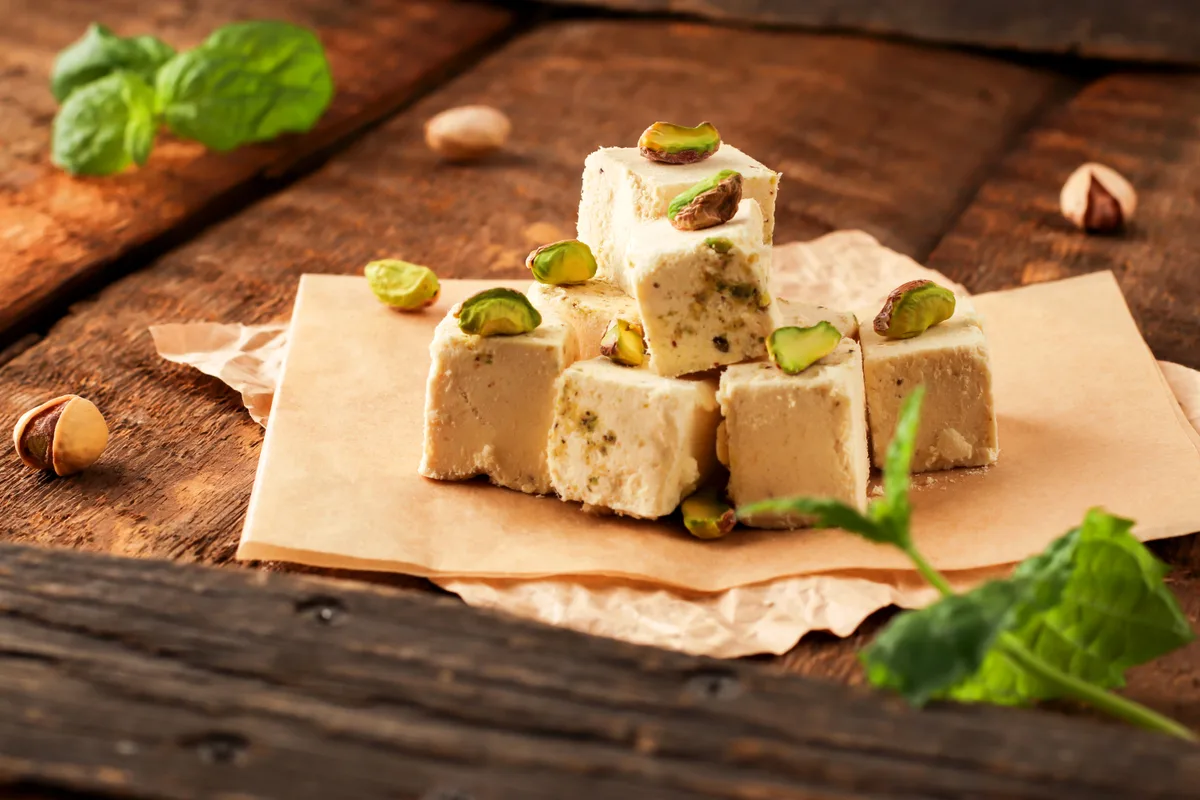
Tahini is a smooth, pourable paste made by grinding sesame seeds — traditionally between stone mills — until the seed's own oil binds the ground meal into a spreadable paste, no added oil required in a well-made jar. It is the base of hummus, the drizzle on roasted vegetables, and, thinned with sugar syrup, the raw material of halva. Quality tahini is judged on three things: the sesame it started from, whether the seed was hulled before grinding, and how it was milled.
Levant Direct does not currently list jarred tahini as a standalone catalogue item — we source it on request through our supplier houses when a buyer needs it. What we do carry from the same sesame tradition is Srour's pistachio halawa, a tahini-based sweet pressed to a Damascus recipe, and Hamdan's sesame breadsticks, which put the same seed to a different use. This guide covers what tahini is and how to judge it, whichever supplier you buy the jar from.
What tahini actually is
Good tahini has one ingredient: sesame seed, roasted and ground until the seed's own oil emulsifies the paste smooth. Nothing else is required — no added oil, salt, or stabilizer — though some producers add a pinch of salt. The seed is typically roasted lightly first, which develops the nutty flavour, then ground, traditionally between stone wheels turning slowly enough that friction heat doesn't scorch the paste. Stone-milling is slower than steel-burr grinding but tends to produce a smoother, less bitter result because the seed isn't overheated in the process. Roast level is a house-style choice as much as a technical one: a lighter roast keeps the paste pale and mild, while a darker roast pushes the flavour toward something closer to nut butter, more assertive and slightly bitter at the edges — neither is more 'correct', but a buyer should know which style a supplier is actually selling before committing to a case.
Where the sesame comes from — and why it matters
Sesame origin is the single biggest driver of tahini quality, and the trade's consensus points to one region. Ethiopia's Humera sesame — grown in the Tigray region near the Eritrean and Sudanese borders — is widely regarded by tahini producers and food press as the premium seed for tahini, prized for a buttery, complex flavour that holds up unmasked; Sudan is the other major source buyers look to (Saveur, 2017, saveur.com). Levantine and Israeli tahini brands that lead on flavour almost always name Humera or Sudanese sesame on the label — a supplier who can't tell you where the seed grew usually can't tell you much else about the jar.
Hulled vs. unhulled, and how to judge what's in the jar
Hulled tahini — seed with the outer husk removed before grinding — is the standard for hummus and most Levantine cooking: paler, smoother, and milder. Unhulled tahini keeps the husk, which adds fibre, a more mineral, slightly bitter edge, and a darker colour; it suits buyers building a specific flavour profile rather than an all-purpose paste.
| Signal | What it tells you |
|---|---|
| Colour | Pale ivory to light gold reads clean; dark brown or grey often means unhulled seed, over-roasting, or age |
| Texture after stirring | Should recombine into a smooth, pourable paste; a paste that stays gritty or claylike was ground too coarse |
| Oil separation | A layer of oil on top of a freshly opened jar is normal and expected — stir it back in, it is not spoilage |
| Taste | Nutty with a clean finish is good; sharp, lingering bitterness usually signals stale or poorly hulled seed |
Beyond hummus: how kitchens use tahini
Hummus is only the most visible use. Tahini thinned with lemon juice, garlic and a little water becomes a pourable sauce for roasted vegetables, falafel, and grilled meats; whisked into a vinaigrette it replaces oil as the emulsifier and carries a nuttier finish than a standard dressing. Pastry kitchens use it beyond the dessert case too — tahini folded into cookie dough, swirled into brownies, or cooked down with sugar into a tahini caramel that reads less sweet and more savoury than a standard caramel. For a menu already running sesame in savoury form, tahini is usually the easiest single ingredient to extend across both the kitchen and the pastry section without adding a new supplier line.
Tahini in a Levantine pantry — and how we handle it
Because tahini itself is not a standing catalogue line for us, we source it on request through our supplier houses rather than list a jar we can't stand behind on origin. What we do stock from the same pantry are two products that put sesame to work in different forms: Srour's Halawa with Pistachio, a sesame-and-sugar confection built from the same base paste, and Hamdan's Sesame Breadsticks, a savoury use of the whole seed. If tahini itself is what you need for a kitchen or shelf program, tell us the format and volume in your inquiry and we'll source it from a named house, not a shell brand.
Related questions
Is tahini the same thing as 'tahina'?
Yes — 'tahini' and 'tahina' name the same sesame paste; the spelling shifts by transliteration and region (tahina is common in Arabic and some Mediterranean labelling, tahini in North American retail). Check the ingredient list, not the spelling, to judge what's actually in the jar.
Does the oil layer on top of tahini mean it's gone bad?
No. Natural separation is normal in a paste with no stabilizers — the seed's oil rises over time, especially after the jar has sat still. Stir it back through before using; it's only a concern if the paste smells rancid or has visible mould.
Should I buy hulled or unhulled tahini?
Hulled is the safer default for hummus, sauces, and baking — smoother and milder. Unhulled suits buyers who want the extra fibre and a more assertive, slightly bitter flavour, or who are matching a specific regional recipe.
Do you sell tahini directly?
Not as a standing catalogue line — we source it on request through our supplier houses so we can name the producer and origin rather than list a generic jar. Add it to your inquiry with the format and volume you need.