For Restaurants & Cafés
The Levantine hotel breakfast program: building the buffet from shelf-stable lines
A Levantine hotel breakfast program needs five stations: za'atar and olive oil with warm flatbread, an olive and vegetable mezze, a sweet corner built on halawa, a short herbal tea list, and cardamom coffee. Almost every line behind those stations is shelf-stable — a rare quality in breakfast programming — so par levels hold without cold-chain complexity, and the entire list buys by the case on one quotation from Levant Direct.
For a GTA hotel the program does double duty: it distinguishes the buffet for international guests who know these flavours from home, and it reads as genuinely local in a region where Levantine food is part of the everyday landscape. This guide builds the buffet station by station.
The za'atar station is the program's signature
Every memorable buffet has one station guests photograph, and here it is a bowl of za'atar beside good olive oil and warm flatbread — guests dip, swipe and season their own eggs. The ritual is the point: in 2023 UNESCO inscribed al-man'ouché, Lebanon's emblematic flatbread practice on its Representative List of Intangible Cultural Heritage — thyme, sumac, sesame, salt and olive oil on dough, tied to the morning sobhhiyé gathering. A hotel breakfast is the sobhhiyé, institutionalized.
The pantry behind the station is two or three lines: Green Jordanian Thyme or the red thyme za'atar-style blend and Lio's premium virgin olive oil in 250 ml bottles that decant neatly into cruets. Where the kitchen bakes, the same lines feed a manakish tray; ratios are in the za'atar-to-oil ratio for manakish, and the wider application list in za'atar on the menu.
Olives and mezze: portion formats decide the labour
Buffet olives are a portioning problem before they are a flavour problem. Zer Black Olives in 170 g vacuum packs — forty-eight to a case — refill bowls one pack at a time with no brine handling at service; Green Olives Salkini in 1300 g glass anchor the mezze display; sliced black olives go to the omelette station ready to scatter.
Round the spread out with artichoke and capers from the jarred kitchen. Fresh components — labneh, cheeses, vegetables, eggs — stay with your local dairy and produce suppliers; the catalogue's job is the shelf-stable frame around them, and we say so plainly.
The sweet corner: halawa, breadsticks and the bread basket
Halawa at breakfast is the Levant's answer to the jam pot: Srour's halawa with pistachio — an 800 g block pressed to a Damascus recipe — slices onto a marble board and pairs with warm bread the way guests from Amman to Aleppo expect. Sliced daily, one block holds the station for days of service.
The bread basket earns variety without baking labour from Hamdan's breadstick cartons — sesame, anis, thyme and bran. Fruit preserves in the Levantine style — fig, apricot, rose — are not in the visible catalogue; they can be raised as a sourcing request on the same inquiry.
Teas and coffee close the circle
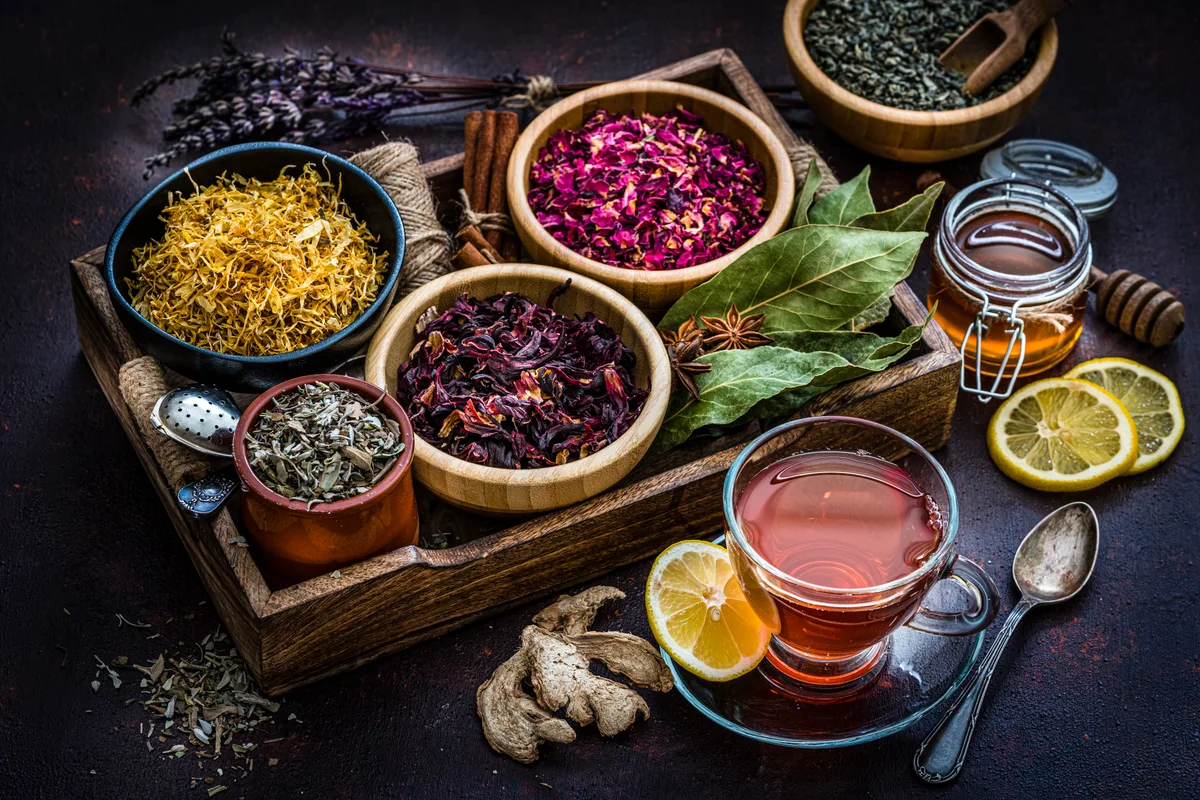
A short, honest hot-drinks list beats a long generic one. From the herbs and teas rack: mint for the classic glass, sage leaves for the winter pot, mixed herbs in the zhourat spirit, and hibiscus served iced on the summer terrace.
The signature pour is Lio's ground coffee with cardamom — 100 g packs by the case of thirty keep the grind fresh — offered as a small-pot ritual beside the espresso machines rather than instead of them. Brewing method for volume service is covered in brewing Arabic coffee for a café.
Par levels and the purchasing rhythm
Because the program is shelf-stable, purchasing settles into a calm monthly rhythm: set a par per station, count down stock, and send one consolidated inquiry when the pantry hits reorder point. One quotation returns, typically within a business day, and delivery across the GTA is confirmed on it — see how delivery works.
| Station | Lines | Service note |
|---|---|---|
| Za'atar and oil | Green or red blend, 250 ml olive oil | Dip bowls plus cruets; manakish if baking |
| Olive mezze | Vacuum packs, Salkini jar, sliced olives | Vacuum packs refill bowls with no brine work |
| Jarred mezze | Artichoke, capers | Assembly only, no cookery |
| Sweet corner | Halawa block, breadstick cartons | Slice daily; preserves on request |
| Teas | Mint, sage, mixed herbs, hibiscus | Loose-leaf pots; hibiscus iced in summer |
| Coffee ritual | Cardamom coffee, three calibrations | Small-pot service beside espresso |
Related questions
Why build a hotel breakfast program on shelf-stable lines?
Par levels hold without cold-chain risk, waste stays low because unopened stock keeps, and purchasing collapses into one monthly inquiry. The fresh components still come daily from local suppliers — the shelf-stable frame is what makes the program operationally cheap to run.
What makes a breakfast buffet read as Levantine rather than generic Mediterranean?
The za'atar-and-oil station, halawa on the sweet board and cardamom coffee service. Olives and preserves appear on many buffets; those three signatures are the ones guests from the region recognize immediately.
Can you supply labneh, cheese or eggs for the buffet?
No — fresh and chilled goods are outside an import catalogue's honest range. We cover the shelf-stable lines listed here; dairies and produce suppliers in the GTA cover the rest, and the two orders run comfortably in parallel.