For Restaurants & Cafés
Za'atar on the menu: beyond manakish, from fries to the pastry case
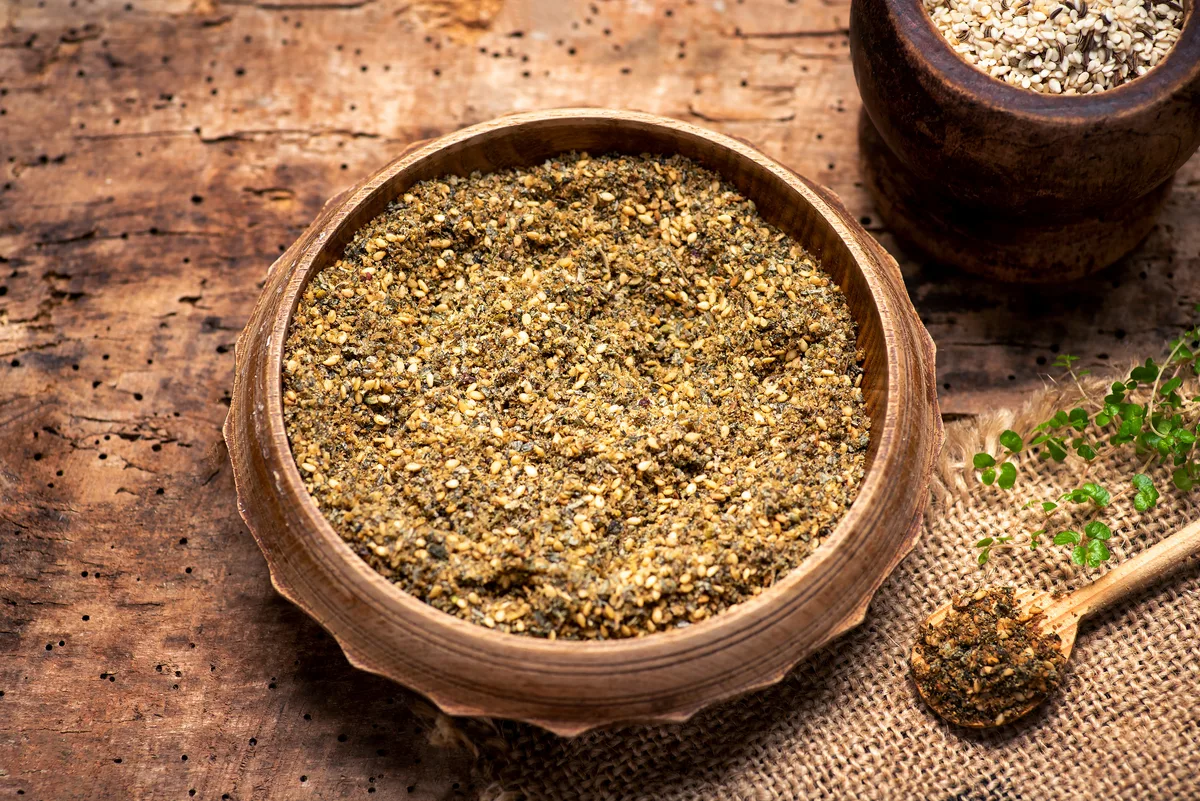
Za'atar earns its keep far beyond the manakish oven: tossed on fries straight from the fryer, rubbed under roast chicken skin, whisked into dressings and aioli, folded through croissant dough, scattered over eggs, even dusted on popcorn. Because the blend is shelf-stable and used by the spoonful, one case can season half a menu — which makes it the single highest-leverage line in the Levantine pantry.
We stock two blends from AbdulRahim Mills, a Palestinian-heritage mill in Jordan — herb-forward Green Jordanian Thyme and a red thyme za'atar-style blend in 500 g packs — plus the bulk sumac that gives za'atar its sour edge. This guide covers the classic, the choice between green and red, and a dozen places the blend belongs.
Start from the classic — the manakish benchmark
Every za'atar idea riffs on one original: the blend worked to a paste with olive oil and baked onto dough. That original now has world-heritage standing — in 2023 UNESCO inscribed al-man'ouché, Lebanon's emblematic culinary practice on its Representative List of Intangible Cultural Heritage, describing exactly this flatbread of thyme, sumac, toasted sesame, salt and olive oil, eaten at the morning sobhhiyé.
For the working method, keep the paste loose enough to spread and tight enough to stay put — the ratio question is answered properly in the za'atar-to-oil ratio for manakish. Pair the blend with Lio's premium virgin olive oil in 250 ml bottles and the station is two SKUs deep.
Green vs red: choose the blend for the job
The two blends are tools, not rivals. Green Jordanian Thyme is herb-forward — grassy, savoury, sesame-flecked — and shines raw: finishing labneh bowls, salads, eggs and dips, where its freshness stays audible. The red blend carries more sumac warmth and colour, and holds up to heat: bakes, roast chicken, fries and anything that sees the oven.
Kitchens running both simply split the day: green at the pass, red at the oven. The fuller comparison lives in green vs red za'atar.
Twelve places za'atar belongs on a working menu
Each application below is a garnish-level cost against a menu-level payoff — the blend does the branding for you.
| Application | How | Which blend |
|---|---|---|
| Za'atar fries | Toss straight from the fryer, as with salt | Red |
| Roast chicken | Rub with oil under and over the skin | Red |
| Labneh and dips | Dust generously, well of oil in the centre | Green |
| House dressing | Whisk into lemon and olive oil | Green |
| Za'atar aioli | Fold into garlic mayonnaise for sandwiches | Either |
| Croissants and twists | Laminate or brush as a paste before baking | Red |
| Eggs and shakshuka | Finish at the pass | Green |
| Focaccia and crackers | Top with oil before the bake | Red |
| Popcorn | Dust with fine salt for bar service | Either |
| Grilled cheese plates | Season halloumi-style cheese off the grill | Green |
| Roasted vegetables | Toss cauliflower or carrots after roasting | Red |
| Bread service | Oil-and-za'atar dish instead of butter | Either |
Portioning and freshness: treat it like coffee, not flour
Za'atar's value is volatile aroma, so handle it the way a café handles beans. Keep a small working shaker or bowl on the line and refill it from the sealed master pack, which lives cool, dark and dry — never over the stove. When the herb note fades to dust and only sourness remains, the batch has aged past its best; rotation, not rescue, is the fix.
The shelf-life questions are answered plainly in does za'atar go bad and storing za'atar in a commercial kitchen.
Buying za'atar at wholesale
One inquiry covers the station: both blends, bulk sumac, and the olive oil that carries them. Send quantities once and a written quotation returns, typically within a business day. Where za'atar sits inside the wider shelf — spices, molasses, coffee, sweets — is mapped in the Lebanese restaurant pantry, and the national sourcing picture in wholesale za'atar in Canada.
Related questions
Is za'atar a herb or a blend?
Both, which causes the confusion. Za'atar is the wild thyme-family herb of the Levant, and also the blend built on it — dried herb, sumac, toasted sesame and salt. On a menu and in this catalogue, za'atar means the blend.
Can dried thyme and oregano substitute for za'atar?
Only roughly. The herb note overlaps, but the substitution misses sumac's sour edge and the toasted sesame's body — the two things guests actually notice. Given the blend is shelf-stable and used by the spoonful, substituting rarely makes sense in a professional kitchen.
How long does an opened pack keep its punch?
Stored sealed, cool and dark, months rather than weeks — but aroma fades gradually, so buy in packs your kitchen turns over, keep the master pack closed, and refill a small line container. Your nose is the honest gauge.