Product Guides
The dried herb rack: mint, marjoram, sage and laurel in the Levantine kitchen
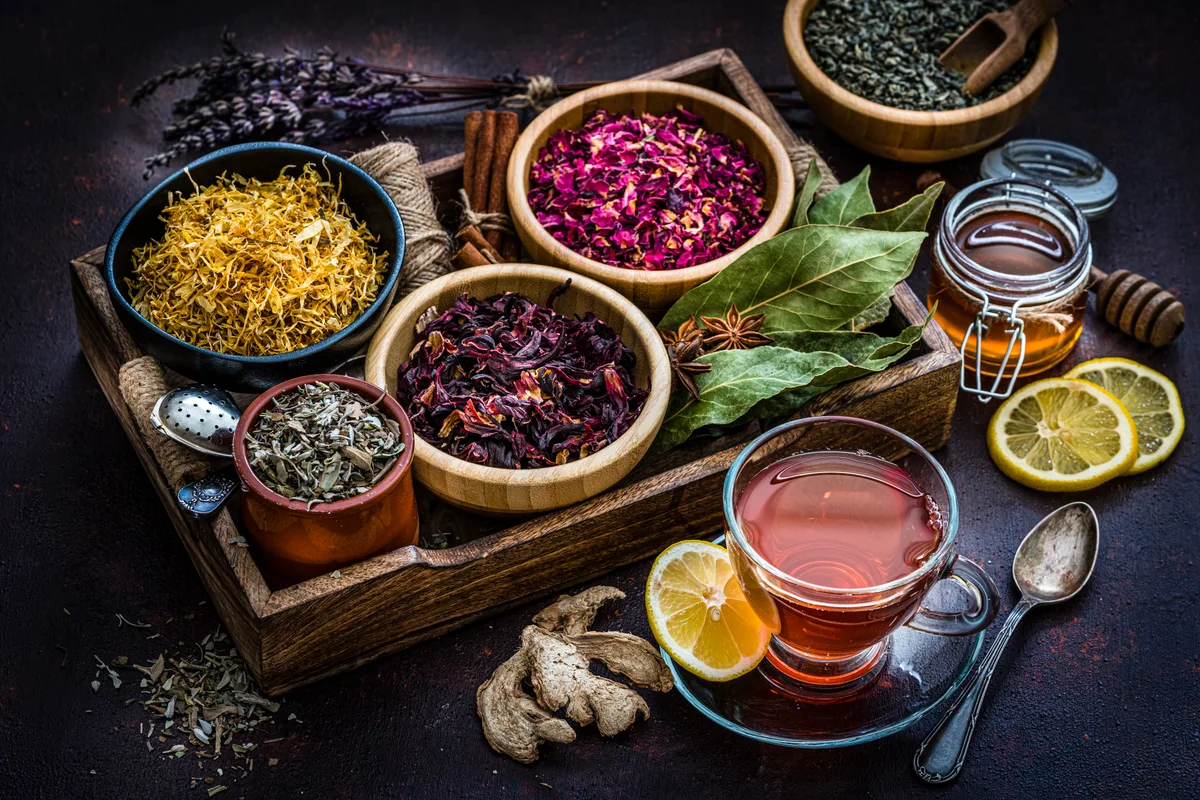
Behind the spice rack that gets all the attention — za'atar, sumac, seven spice — sits a quieter shelf of dried herbs that a Levantine kitchen leans on just as hard: mint, marjoram, sage, rosemary and laurel leaf. They season savoury dishes, go into the family zhourat tin, and, in mint and marjoram's case, are close cousins of the herbs milled into za'atar itself.
We stock five of these as standalone dried herbs from AbdulRahim Mills' Amman mill, sold whole rather than pre-crushed, in the Herbs & Teas range.
The five herbs, and what each one does
Each is sold separately: Mint, Marjoram, Sage Leaves, Rosemary and laurel leaf. Buying single herbs rather than a fixed blend gives a kitchen or grocer control over ratio and lets a savoury program and a tea program draw from the same case without waste.
| Herb | Arabic name | Savoury use | Tea use |
|---|---|---|---|
| Mint | na'na (نعنع) | Tabbouleh, stuffed grape leaves, lamb dishes | The brightest note in a zhourat blend |
| Marjoram | mardakoush (مردقوش) | Roast vegetables, stews, spice blends | Earthy background note in tea blends |
| Sage | miramiyeh (ميرامية) | Poured as a standalone infusion; savoury dishes | Often brewed on its own, strong and aromatic |
| Rosemary | iklil al-jabal (إكليل الجبل) | Roast meats, potatoes, marinades | Resinous backbone in a house blend |
| Laurel leaf | waraq ghar (ورق غار) | Stocks, stews, rice dishes — used by the leaf | Added whole, for aroma rather than bulk |
Savoury kitchen uses beyond the obvious
Mint and marjoram do double duty on a Levantine menu — mint through tabbouleh, stuffed grape leaves and lamb, marjoram folded into roast vegetables, stews and house spice blends alongside thyme and sumac. Rosemary earns its place with roasted meats and potatoes, much as it does in other Mediterranean kitchens, while laurel leaf is a stock-pot and rice-pot staple, dropped in whole and fished out before serving rather than ground into the dish.
Sage stands a little apart: it's used savoury in some regional dishes, but its most common role in a Levantine kitchen is brewed on its own as a strong, aromatic infusion — a single-herb alternative to a full zhourat blend. For more on how these herbs come together into that blend, see our guide to zhourat and Levantine herbal teas.
Building a dried herb program that serves both the kitchen and the tea shelf
The efficient way to stock these five is to treat them as one program rather than two separate ones — a savoury spice line and a tea line drawing from the same cases. Mint and marjoram in particular earn their keep twice: the same bag that seasons a batch of tabbouleh or a roast-vegetable tray also goes into the afternoon's zhourat pot, which means a kitchen buying for both uses only needs to hold one SKU of each rather than duplicate stock under two different labels.
For a restaurant or café building a spice-and-herb case from scratch, a reasonable starting order covers mint and marjoram at higher volume (savoury use is more frequent than tea use in most kitchens), sage and rosemary at a moderate level, and laurel leaf in smaller quantity since it's used by the leaf rather than the pinch and a little goes a long way through a stock pot or rice pot. Reorder against whichever line moves fastest rather than restocking all five on a fixed schedule — mint in a busy tabbouleh kitchen will always outpace laurel leaf in a rice-forward one.
Judging quality and storing dried herbs at commercial scale
The same three checks apply across all five: whole leaf rather than crushed dust, colour that still reads green rather than faded brown, and an aroma you can smell through the packaging before you open it. A herb that has lost all three has lost its usefulness on the plate even though it's still perfectly safe to cook with — dried herbs don't spoil so much as they fade.
For a working kitchen buying in case quantities, decant from the shipping bag into an airtight container as soon as it's opened, store it away from the stove's heat and the dish pit's steam, and work first-in-first-out against your fastest-moving lines. Buying whole leaf and crushing only what a shift needs — rather than stocking a pre-crushed jar — is the single biggest lever for keeping flavour consistent from the first portion to the last.
Related questions
How is Levantine dried mint different from regular dried mint?
Botanically it's usually the same spearmint family used elsewhere, but the difference buyers notice is processing and freshness — herb sold whole and dried to order, without long warehouse time, holds far more aroma than a generic supermarket jar that's been sitting for months.
Do dried herbs like mint, sage and rosemary expire?
They don't become unsafe the way fresh produce does, but they lose colour and aroma over time, especially if stored warm or in light. Treat a faded, weak-smelling herb as past its useful life even if the package date says otherwise, and rotate stock so the oldest bag gets used first.
What's the difference between marjoram and za'atar?
Marjoram is a single dried herb; za'atar is a blend that typically combines wild thyme, sumac and toasted sesame, sometimes with marjoram folded in. They're related but not interchangeable — see our za'atar wholesale guide for the blend itself.
Can these herbs be bought individually rather than as a mix?
Yes — mint, marjoram, sage, rosemary and laurel leaf are each sold as standalone dried herbs in our catalogue, so a kitchen or grocer can order exactly the ratio they need rather than committing to a fixed pre-blended tin.