Sourcing & Wholesale
Wholesale za'atar in Canada: grades, formats and how to source it well
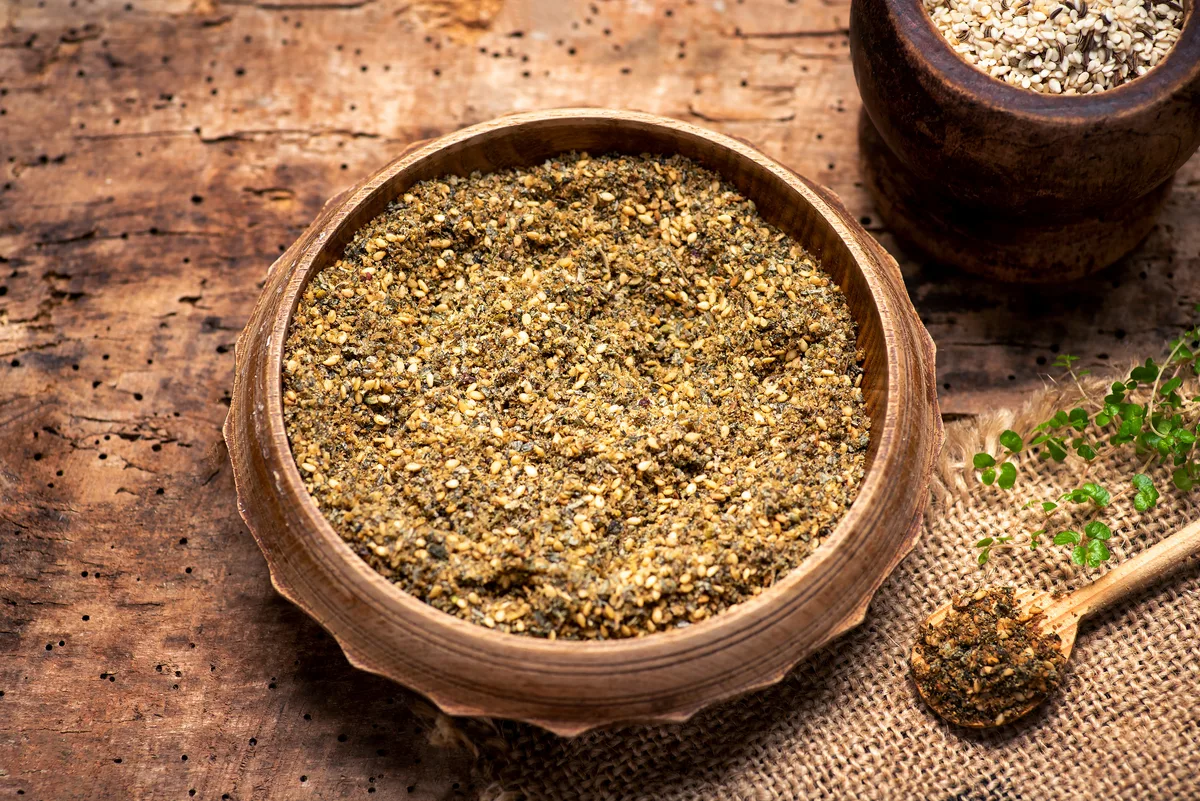
Buying za'atar wholesale in Canada comes down to two decisions: which grade of blend suits your kitchen or shelf, and whether your supplier mills at origin or blends imported components locally. We stock two Jordanian-milled lines from AbdulRahim Mills — Green Jordanian Thyme and a red za'atar-style blend in 500 g packs — and quote them by inquiry, typically within a business day. Other regional grades can be sourced on request through the mill.
This guide covers what a wholesale buyer is actually paying for in a za'atar blend, how the green and red grades differ, what formats make sense for restaurants versus grocers, and the quality checks worth running before you commit to cases.
What you are actually buying in a za'atar blend
Za'atar the product is a blend built on za'atar the herb — wild thyme of the Origanum and Thymbra families — cut with sumac for sourness, toasted sesame for richness, and salt. The proportions are the miller's signature, which is why two bags labelled identically can behave completely differently on a manakish or a labneh bowl.
The blend's cultural weight is real and recognized: in 2023, UNESCO inscribed al-man'ouché — the Lebanese flatbread topped with thyme, sumac, toasted sesame, salt and olive oil — on its Representative List of Intangible Cultural Heritage (UNESCO, 2023). For a bakery or café, that is not trivia; it is why a proper blend, milled where the tradition lives, out-sells a generic thyme mix.
Origin milling matters for a second, practical reason: the herb, the sumac and the sesame are all local crops in Jordan and the Levant. A mill like AbdulRahim Mills blends them fresh at source, rather than assembling components that each travelled separately.
Green vs red: the two working grades
Green za'atar leads with the herb — bright, grassy, heavy on thyme — while red blends lean on sumac for a darker colour and a sharper, fruitier sourness. Neither is better; they serve different jobs, and many operators stock both. Our deeper comparison is in green vs red za'atar.
| Blend | Character | Best for | Buyer fit |
|---|---|---|---|
| Green Jordanian Thyme | Herb-forward, bright green, grassy aroma | Manakish, breakfast spreads, labneh, salads | Bakeries, cafés, grocers with a Palestinian or Jordanian customer base |
| Red Thyme (za'atar-style blend), 500 g | Sumac-forward, deeper colour, sharper sour edge | Roast chicken, fries, grilling rubs, retail jars | Restaurants, shawarma shops, mainstream retail shelves |
Formats and case planning for kitchens and shelves
For a working bakery, za'atar is a volume ingredient: the classic manakish topping is the blend loosened with olive oil in roughly equal parts, spread generously per flatbread, so a busy weekend runs through kilograms, not jars. The 500 g pack format keeps the blend fresher in rotation than a single large sack that sits open for months.
Grocers think in facings instead: the same 500 g format shelves cleanly, and pairing it with sumac from the same mill makes the set read as a serious Levantine section rather than a token SKU. Quantities beyond the listed formats — food-service sacks, blending volumes — belong in your inquiry note; bulk supply is quoted the same way, and products we do not list can be requested through the mill.
Storage discipline protects whichever format you choose: keep master packs sealed, cool and dark, decant a small working container for the line or the sample station, and rotate first-in, first-out. Za'atar's enemies are steam, sunlight and time with the bag open — none of which cost money to avoid.
Quality checks before you commit to cases
Run these checks on any wholesale za'atar, ours included. A good blend announces itself before it reaches the oven.
- Aroma first: the bag should smell of thyme and toasted sesame the moment it opens. A flat smell means old stock.
- Colour that matches the grade: vivid green for green blends, deep brick for red — dull khaki suggests age or padding.
- Read the ingredient list for fillers: wheat, excess salt or citric acid stretching the blend is the classic cost-cutting move.
- Sesame condition: seeds should be whole and toasted, not dusty or rancid-smelling.
- Provenance in writing: who milled it, where, and when — a serious supplier answers without hesitation.
How sourcing by inquiry works for za'atar
There are no list prices here or at most serious wholesale suppliers in this category — case pricing depends on quantities, mix and delivery, so the working document is a quotation. Add both blends, sumac and anything else from the spice range to one inquiry list, state quantities, and one written quote comes back covering every line, typically within a business day. Delivery runs across the GTA, and shelf-stable goods like za'atar quote well nationally.
If your concept needs a specific regional style — a Palestinian blend heavier on sesame, a Syrian cut with more sumac — say so in the inquiry. Grades beyond the two stocked lines are sourced on request through our supplier houses rather than held as stock, and the quotation will say plainly what is available and when.
Related questions
Is za'atar the same as dried thyme?
No. Dried thyme is one herb; za'atar is a finished blend of wild thyme, sumac, toasted sesame and salt. Substituting plain thyme loses the sourness and richness that make the blend work on manakish and salads.
Does za'atar go bad?
It fades rather than spoils. Kept sealed, cool and away from light, a blend holds its aroma for months; the working test is smell and colour. Rotate stock first-in, first-out and buy pack sizes you will finish.
Can you supply za'atar in bulk for a bakery or blender?
Yes — state the volumes you need in your inquiry. Listed formats are quoted directly, and larger food-service quantities or other regional grades are sourced on request through AbdulRahim Mills, with availability confirmed on the quotation.