Product Guides
Zhourat and the Levantine herbal tea shelf: what's actually in the blend
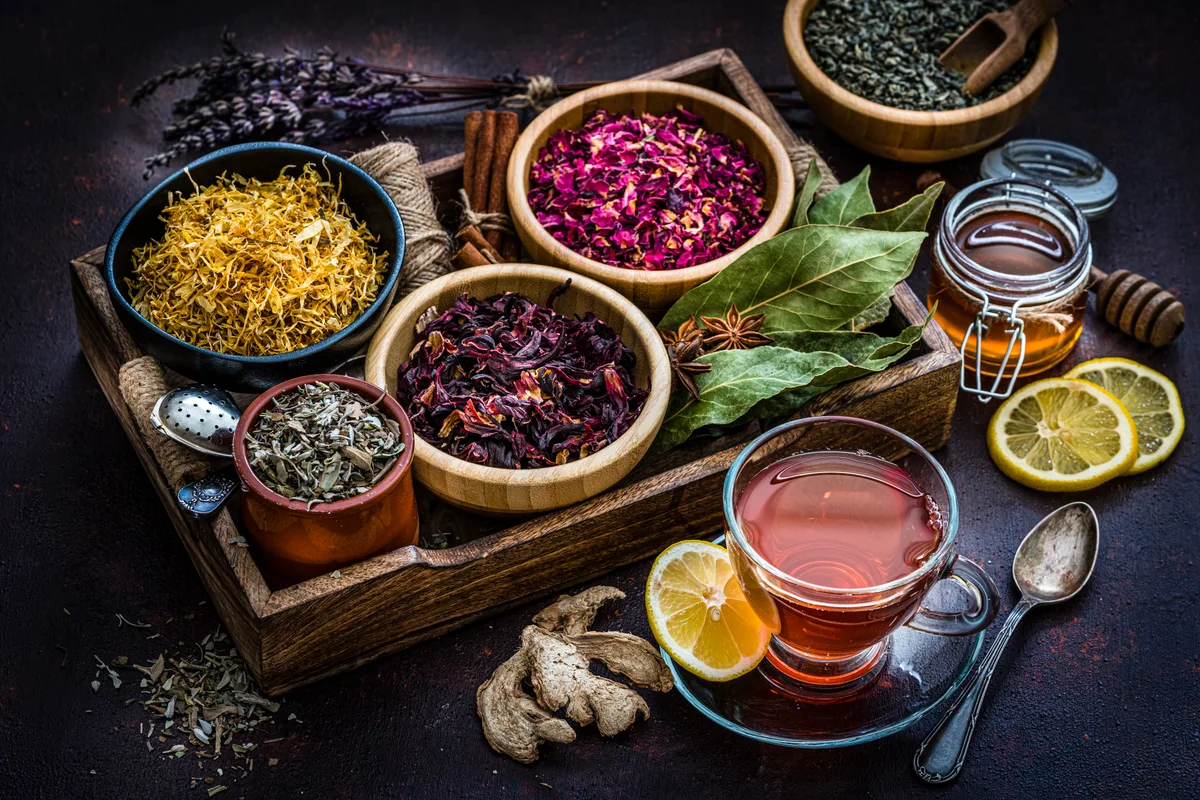
Zhourat (زهورات — literally "little flowers") is the Levantine name for a loose-leaf herbal tea blend: dried mint, sage, marjoram, rosemary, laurel and hibiscus mixed to the maker's own ratio and steeped hot, usually after a meal or poured for a guest as the caffeine-free counterpart to Arabic coffee. There's no fixed recipe — a Damascene household's tin differs from an Amman one, and a café's house blend differs from both — which is why what actually gets bought and sold in this category is the individual dried herb, not a single standardized "zhourat" box.
For a GTA café, grocer or gift shop, that's useful: you can build your own house blend, sell the herbs loose for customers to mix at home, or pour single-origin infusions — a pure mint tisane, a hibiscus cooler — alongside it. We carry several of the herbs a classic blend is built from as Herbs & Teas lines from AbdulRahim Mills, dried and packed at the family's Amman mill.
What actually goes into a zhourat blend
Every household and café blends differently, but a handful of herbs recur across the region's versions. Mint (na'na) supplies the brightness most drinkers expect first; sage (miramiyeh) and marjoram (mardakoush) add an earthy, savoury note that balances it; rosemary contributes a resinous backbone; laurel leaf goes in by the leaf rather than the pinch, for aroma rather than bulk; and hibiscus (karkadeh) is often folded in — or served entirely on its own — for its deep red colour and tart edge.
We stock each of these as a standalone dried herb: Mint, Sage Leaves, Marjoram, Rosemary, laurel leaf and Hibiscus — see our hibiscus guide for more on that one specifically. Buying them separately rather than pre-blended means your kitchen controls the ratio, and can adjust it by season or by how tart a given batch of hibiscus runs.
What separates good dried herb from tired dried herb
Quality in loose dried herbs shows up in three places before you even brew a cup, and it has nothing to do with health properties — it's simply whether the leaf still has flavour to give.
- Whole leaf, not dust: crushed and powdered herb oxidizes and brews bitter faster than whole leaf.
- Colour still true: green herbs should read green or grey-green, not faded brown.
- Aroma on opening: if you can't smell it through the bag, it's already fading.
- Origin named: know which mill packed it, not just which broker sold it on.
Buying and blending for a café or retail shelf
For café service, a working ratio is a rounded teaspoon of blended herb per cup, steeped four to six minutes off the boil; scale up for a pot and let guests judge strength for themselves. For retail, loose herbs sell well pre-portioned into small kraft bags or tins with the blend named in Arabic and English — "Zhourat" sells as a concept even to customers who have never had it, provided the bag looks and smells the part.
This is flavour-and-tradition territory only. We describe these herbs by taste, aroma and how the Levant has traditionally used them in the teapot — not by any therapeutic or wellness claim — and the same discipline is worth applying to your own shelf talkers and menu copy.
Pairing zhourat with the rest of a Levantine menu
Zhourat pairs naturally with the sweet end of a Levantine menu — a small glass alongside maamoul or another wholesale Levantine sweet is a common way to close a meal, and it gives a café a caffeine-free option to offer alongside Arabic coffee rather than instead of it. Iced, a hibiscus-forward version works as a summer draw the same way lemonade or iced tea does on a mainstream café menu, without needing to explain the concept from scratch — most customers recognize a deep-red herbal iced tea on sight even if they've never heard the word zhourat before.
For a grocer, the same herbs sell two ways at once: bagged individually for a customer who wants to build their own blend at home, and pre-mixed as a house "zhourat" bag for a customer who wants the shortcut. Carrying both formats from the same base stock — rather than committing separate shelf space to one or the other — is usually the simplest way to serve both kinds of buyer without doubling inventory or guessing which one your customers actually prefer.
Storing dried herbs and teas in a working kitchen
Dried herbs and teas are shelf-stable but not indestructible. Keep them sealed, away from direct light and away from the stove or dish pit's heat and steam — moisture and warmth shorten a dried herb's useful life far faster than time alone. Decant from the shipping bag into an airtight container once it's opened, label it with the date, and work first-in-first-out against whichever blend moves fastest on your menu.
Whole leaf holds its aroma longer than crushed, which is one more reason to buy whole and blend to order rather than stock a pre-crushed house mix that fades before you use it up.
Related questions
What is zhourat, exactly?
Zhourat is the Levantine name for a loose-leaf herbal tea blend — typically some mix of dried mint, sage, marjoram, rosemary, laurel and hibiscus — drunk hot, usually after a meal. It isn't one fixed recipe; every household, café and region blends its own.
Does dried herbal tea go bad?
Dried herbs don't spoil the way fresh produce does, but they do lose aroma and colour over time, faster if stored warm, damp or in direct light. Keep them sealed and cool and use the oldest stock first; a herb that has faded in smell has faded in flavour, even once it's past its best.
How should a café merchandise Levantine herbal teas?
Loose, visibly whole-leaf and named — "zhourat blend" or the individual herb — sells better than an unlabelled tin. Many cafés brew a house zhourat as a default and offer a pure mint or hibiscus infusion alongside it for guests who want one note rather than a blend.
Is zhourat caffeine-free?
Yes — mint, sage, marjoram, rosemary, laurel and hibiscus are all naturally caffeine-free, which is part of why zhourat is traditionally poured as the evening or after-dinner counterpart to Arabic coffee.