Product Guides
Ma'amoul, explained: the Levant's stuffed festival cookie, filling by filling
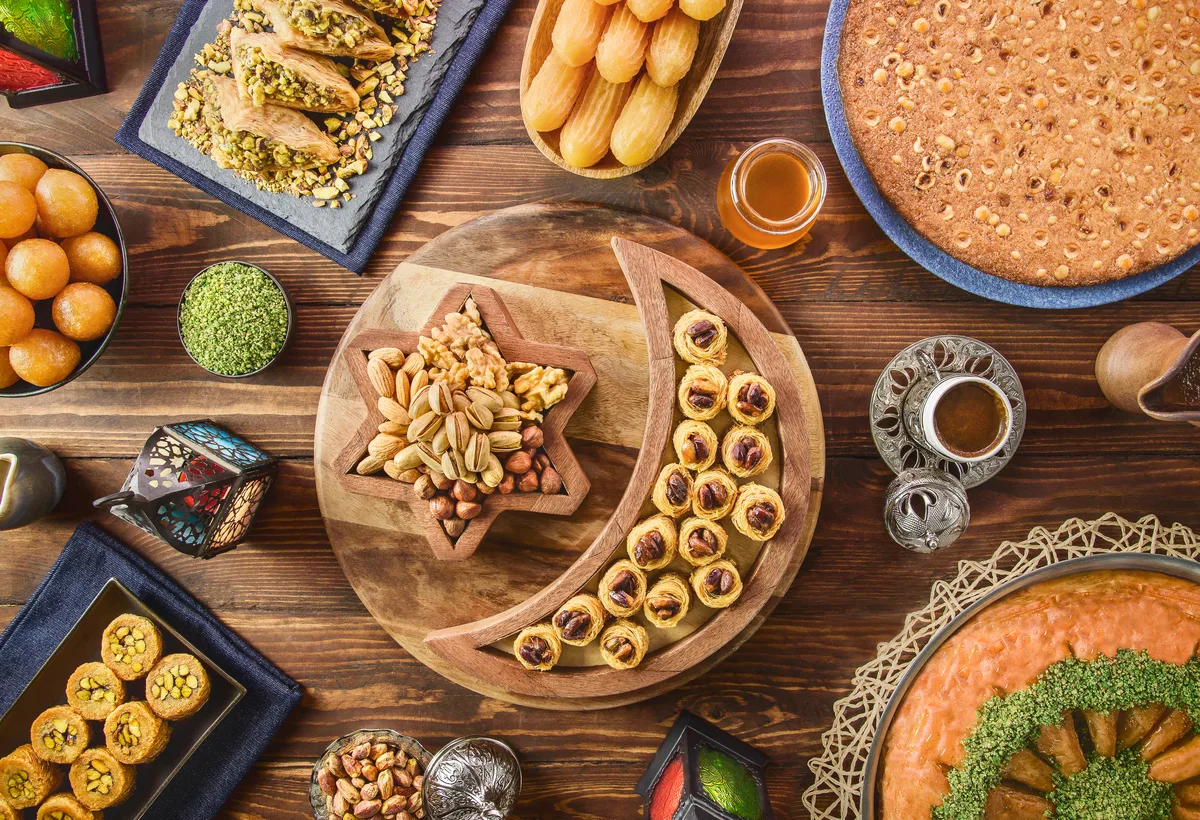
Ma'amoul (معمول) is a stuffed shortbread cookie — a buttery, semolina-based dough pressed into a patterned mould, filled, then closed and baked until pale gold. The mould's carved pattern usually signals the filling inside without cutting the cookie open: convention often uses a domed or plain top for dates and a pinched or striped design for pistachio or walnut, though house styles vary. It's the cookie most associated with Eid al-Fitr in Muslim households and with Easter and Christmas in Levantine Christian households — the same recipe, baked for three different calendars.
Hamdan for Foods, a Damascus-origin house, supplies our four ma'amoul lines, each a 20-piece box built for a counter or gifting program rather than single-cookie sale — a format that works equally well handed out whole as a gift or opened for individual sale at a bakery case.
What's actually in a ma'amoul cookie
The shell is a short, crumbly dough — usually semolina or a semolina-flour blend worked with ghee or clarified butter, sometimes lightly perfumed with mahlab or orange blossom water — pressed by hand or mould around a filling, then closed and baked until set but not browned; a proper ma'amoul stays pale. The filling is where the variety lives: dates cooked down to a soft paste, sometimes with a touch of cardamom; walnuts or pistachios chopped and lightly sweetened; or, in celebratory formats, a mix that includes Turkish delight for extra sweetness and texture.
The four fillings in our catalogue
- Luxury Ma'amoul Dates — the classic date filling in a 20-piece box, the closest thing to a benchmark ma'amoul.
- Ma'amoul Ajweh Sweets — built on ajweh, a rich cooked date paste rather than plain chopped dates, for a deeper, more concentrated filling.
- Ma'amoul Date With Cardamom — the date filling lifted with cardamom, a common Damascus-tradition variation.
- Ma'amoul With Turkish Delight — a festival-format cookie with Turkish delight worked into the filling for a sweeter, more novelty-leaning box.
Why ma'amoul sells on three separate calendars
Ma'amoul demand doesn't cluster once a year — it clusters three times, and each is worth planning inventory around separately. Eid al-Fitr, at the end of Ramadan, is the largest spike and the one most GTA grocers already stock for. Levantine Christian households bake or buy ma'amoul for both Easter and Christmas, which puts a second and third peak on the calendar roughly six months apart from Eid and from each other — a rhythm worth building into a retail or bakery-case reorder schedule rather than treating ma'amoul as a single-season item.
How ma'amoul is traditionally made — and why moulds matter
Traditionally, ma'amoul is shaped in a carved wooden or plastic mould called a tabe, pressed by hand around a portion of filling until the dough closes fully over it and the mould's pattern transfers to the surface. Home bakers and small producers often keep several moulds, one per filling, precisely so a tray of mixed cookies can be sorted by pattern without opening any of them — a convention worth knowing if you're building a mixed gift box and want to describe the assortment accurately on packaging or a shelf card. The dough itself gets very little added sugar; almost all the sweetness in a finished cookie comes from the filling, which is why an under-filled ma'amoul reads dry and bland while a properly filled one tastes balanced.
Buying and holding ma'amoul at retail or foodservice
The 20-piece box format suits both a gift shelf and a bakery counter — sealed, it holds well at room temperature for weeks, which is standard for a shortbread dough with a cooked, low-moisture filling. Once opened for counter sale, treat it like any short dough: keep it away from heat and humidity, and don't stack open boxes where the top layer takes on moisture from the air. Buyers stocking for a specific feast should send their maamoul inquiry with enough lead time for a mixed-case order — case counts and delivery windows tighten as Eid, Easter, or Christmas approaches, the same as any seasonal specialty line. A mixed order across all four fillings also spreads risk for a first-time buyer: rather than committing entirely to one filling, a case split across dates, ajweh, cardamom-date and Turkish delight lets the counter tell you which sells fastest before your next reorder.
Related questions
What fillings do ma'amoul cookies come in?
The three classic fillings are dates, walnuts, and pistachios; our four lines cover date, ajweh (cooked date paste), cardamom-date, and a festival Turkish-delight format. Mould patterns often, though not always, signal the filling without needing to cut the cookie open.
Why do ma'amoul sell around Christmas and Easter, not just Eid?
Ma'amoul is a shared Levantine tradition across faiths — Levantine Christian households bake or buy it for Easter and Christmas the same way Muslim households do for Eid al-Fitr, giving the cookie three separate seasonal peaks rather than one.
How long do ma'amoul keep at room temperature?
Sealed in their box, several weeks is typical for a low-moisture shortbread with a cooked filling — no refrigeration needed. Keep opened boxes away from heat and humidity to protect the dough's texture.
Is ma'amoul the same as baklava?
No. Baklava is layered filo pastry with nuts and syrup; ma'amoul is a moulded shortbread cookie with a single filling pocket and little to no syrup. Both are Levantine festival sweets, but they're built completely differently and often sit side by side on the same feast-season sweets counter.