Product Guides
Sesame across the Levantine pantry: breadsticks, halawa and the thread that connects them
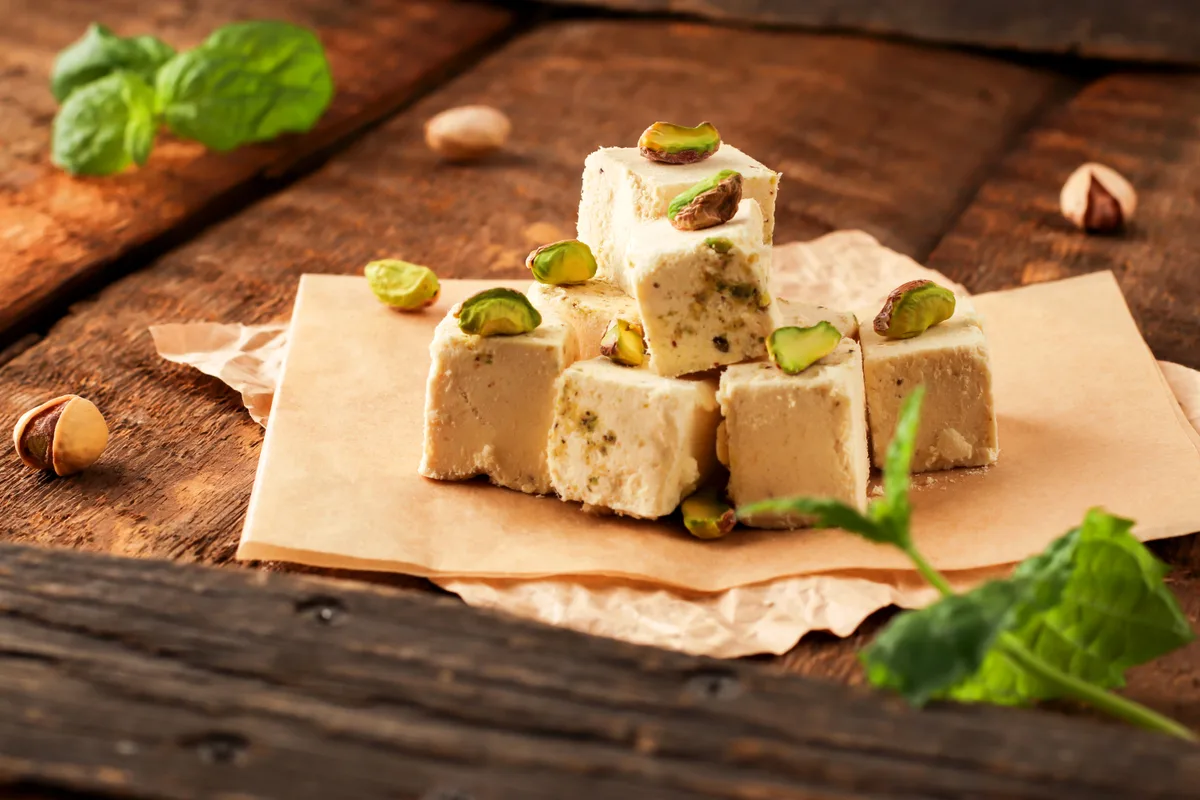
Sesame is the single thread that connects more of the Levantine pantry than any other ingredient — it's the seed under tahini, the seed pressed into halawa, and the topping on nearly every ka'ak and breadstick to come out of a Levantine bakery. We carry it across that spread: whole seed in four grades from AbdulRahim Mills, sesame-crusted breadsticks from Hamdan, and a pistachio halawa from Srour pressed from tahini itself.
This guide walks the sesame thread from whole seed to finished product, and flags the one regulatory fact every buyer handling it needs to know: sesame is a Canadian priority allergen.
Sesame, seed by seed: what we carry
Raw, hulled, golden and roasted sesame cover a kitchen's toasting and topping needs at different stages — raw for toasting fresh in-house, roasted for a ready-to-use garnish, hulled where a lighter colour matters. From there the seed moves into two finished formats we stock directly: Sesame Breadsticks, Damascus-style ka'ak al-Sham with sesame worked through the dough, and Srour's pistachio halawa, pressed from tahini itself.
| Product | Form | Typical use |
|---|---|---|
| Raw sesame | Whole, unroasted seed | Toasting to order, baking, garnish |
| Hulled sesame | Whole seed, hull removed | Lighter colour and texture for tahini-style grinding |
| Golden sesame | Whole seed, golden grade | Bread and pastry topping |
| Roasted sesame | Whole, pre-roasted seed | Ready-to-use topping and garnish |
| Sesame Breadsticks | Baked into the dough | Ka'ak al-Sham, retail and café case |
| Srour Halawa with Pistachio | Pressed tahini, set with pistachio | Dessert counter, gift retail |
Where sesame origin actually matters
Not all sesame is judged equally in the trade. Ethiopia's Humera sesame is widely regarded as the premium seed for tahini production, with Sudan recognized as another major source (Saveur, "The Best Sesame for Tahini Comes From Ethiopia") — origin is one of the clearest quality signals a buyer can ask a supplier about, alongside whether the seed is raw, hulled or roasted.
The paste itself — tahini — isn't a standalone product in our current catalogue; it's sourced on request through our supplier network rather than listed as a fixed SKU. What we carry directly is the seed at each processing stage plus finished products made from it, which covers most kitchens' needs while we're honest about the one gap.
Building a sesame program across a menu or shelf
Because sesame runs through so many separate lines — seed, breadsticks, halawa — it's worth planning as one program rather than reordering each format separately. A bakery finishing its own bread benefits from stocking both raw sesame (for toasting fresh, which gives the strongest aroma) and roasted sesame (for a fast, ready garnish when there's no time to toast to order); a café or grocer selling finished goods is better served focusing on the Sesame Breadsticks and halawa rather than the raw seed at all.
Retailers building a dessert or gift shelf around sesame do well pairing halawa with something to eat it alongside — crackers, bread, or a cheese board — since it's a dense, rich product that sells better as part of a pairing suggestion than sitting alone on a shelf. A shelf card or menu note naming the tahini percentage or pistachio content, where known, also helps a customer unfamiliar with halawa understand what they're buying before they commit to a jar.
Sesame as a Canadian priority allergen
Sesame is one of Canada's priority food allergens, alongside items like peanuts and tree nuts (Food Allergy Canada, "Sesame"). That matters at every point sesame touches your operation: labelling on anything you repack or private-label, cross-contact controls in a kitchen that handles both sesame and sesame-free items, and clear allergen disclosure on any menu or shelf card. This is general guidance only — confirm your specific labelling and handling obligations with the CFIA or your regulator rather than relying on a product description alone.
In practice, that means keeping sesame-topped breadsticks, halawa and raw seed physically separated from sesame-free lines in storage and prep, and making sure any staff-facing allergen list names sesame explicitly rather than folding it into a generic "contains nuts" note.
Mixed inquiries across the sesame line — seed, breadsticks and halawa together, or alongside other pantry and sweets categories — are the norm rather than the exception, and they quote and deliver as one order rather than as several small ones placed separately.
Related questions
What's the difference between raw, hulled and roasted sesame?
Raw sesame is whole and unroasted, meant for toasting to order. Hulled sesame has the outer hull removed for a lighter colour and finer grind, often used heading into tahini-style production. Roasted sesame is pre-toasted and ready to use straight as a topping or garnish.
Do you sell tahini paste directly?
Not as a standalone catalogue product right now. We carry the sesame seed at every processing stage and finished products made from it, and can source tahini paste on request through our supplier network — ask in your inquiry.
Why does sesame origin matter for tahini quality?
Origin affects flavour and oil content. Ethiopia's Humera sesame is widely regarded in the trade as the premium seed for tahini, with Sudan a major source too — it's a reasonable question to ask any tahini or halawa supplier.
Is sesame a regulated allergen in Canada?
Yes — sesame is a Canadian priority allergen. Any product containing it needs clear allergen labelling and, in a shared kitchen, cross-contact controls. This is general guidance; confirm your specific obligations with the CFIA or Food Allergy Canada.