Sourcing & Wholesale
How to start an online spice business, sourced wholesale from origin
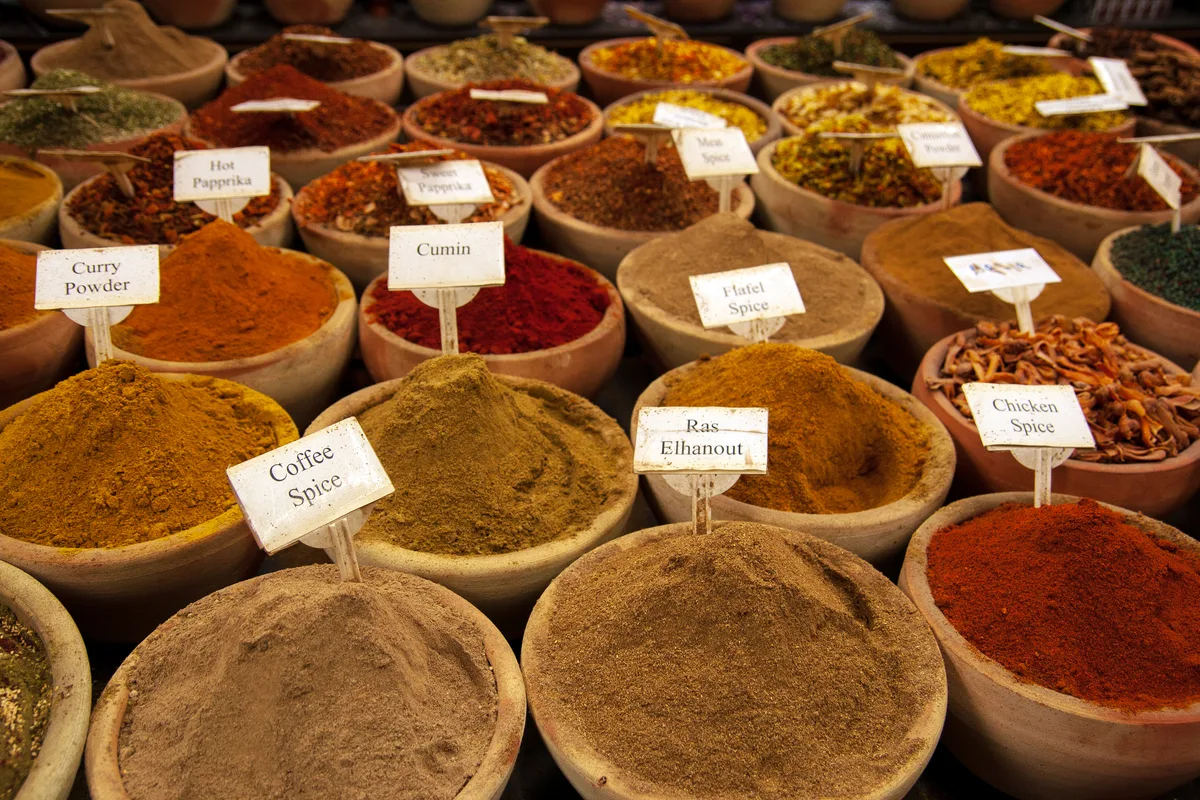
Starting an online spice business is, at its core, a sourcing problem before it's a marketing one. You need a wholesale supplier who names the producer and origin behind every spice, supplies consistent case formats you can repackage or private label, and quotes reliably enough that you can plan a launch date around it. A Levantine spice mill's range is a realistic backbone for that kind of launch — AbdulRahim Mills alone supplies 53 spices and blends, milled in Jordan, and Levant Direct puts that whole range behind one inquiry and one quotation.
This is a sourcing and compliance playbook, not a marketing or platform-selection guide. It covers where the product comes from, how ordering works, and the Canadian labeling rules that apply the moment you repackage spice into your own retail bags or jars.
Choosing a starting range
A launch range works best when it's built around a small number of genuinely popular, distinctive lines rather than an attempt at completeness on day one. Whole vs. ground matters here too — whole spices hold their flavour longer and appeal to a more involved home cook, while ground spices and ready blends sell faster to a shopper who wants convenience; our whole vs. ground spices answer covers the trade-off in more depth. Za'atar and seven spice (baharat) are two of the strongest blend candidates for a launch range precisely because they're distinctive enough to justify buying online rather than off a supermarket shelf; our seven spice guide and bulk Levantine spices for Toronto kitchens both go deeper on individual lines worth considering.
White label vs. private label for a spice launch
Most new spice brands start with white label — their own branding on a spice a mill already produces well — and only move to a fully custom private-label blend once real sales data justifies it. That's the same advice our own private label guide gives to any new brand in this catalogue, and the white label vs. private label answer sets out the distinction precisely. Selling the stocked version of a spice or blend for a season before committing to a custom formulation turns a private-label decision from a guess into a plan backed by real numbers.
Packaging and shipping repackaged spice
However you repackage bulk spice for retail sale, the basic handling rules stay the same: keep spice in airtight containers, away from direct light and heat, from the moment it's repackaged through to shipping. Ground spices and delicate blends lose flavour intensity faster than whole spices once exposed to air and light, so packaging choice matters more for those lines than for something like whole cinnamon sticks.
For online shipping specifically, that generally means opaque or foil-lined packaging rather than clear bags left in direct light on a shelf between orders, and reasonably small batch sizes repackaged closer to the ship date rather than a large batch decanted all at once and left to sit.
The Canadian labeling rules that apply once you repackage
The moment you repackage bulk spice into your own retail bags or jars for sale, Canadian food labeling rules attach to that product. Core mandatory label information — the common name and net quantity among it — must appear in both English and French, under the Safe Food for Canadians Regulations and the Food and Drug Regulations (CFIA bilingual food labeling); our Canadian labeling on imported food guide and the Canadian food label requirements and bilingual labels answers cover the full requirement. Allergen declarations follow Canadian rules too — sesame in particular is a Canadian priority allergen, worth checking against any blend that touches it (sesame as a priority allergen). This is general guidance, not legal advice; confirm labeling specifics for your exact product with the CFIA before your first print run.
Getting this right before your first print run matters more than it might seem: reprinting labels on packaging you've already filled and photographed is far more disruptive than building the correct format into your original design.
How ordering and reordering works for a new spice brand
Ordering follows the standard cycle: add the spices, blends and quantities you want to an inquiry, and a written quotation typically returns within a business day, covering every line. See how inquiry ordering works for the full mechanics. A sensible launch order stays narrow — four to six SKUs built around what genuinely sells at the table, such as za'atar, sumac, seven spice and a shawerma-style blend — rather than the full range at once; reordering is simply resending the same inquiry once you know which lines are actually moving.
Related questions
Should I private label spices from the start, or sell the stocked version first?
Sell the stocked catalogue version first. A season of real sales data makes a subsequent private-label decision far more reliable than starting there from a guess.
Do repackaged spices need bilingual labels in Canada?
Yes, generally. Core mandatory label information, including the common name and net quantity, must appear in both English and French under Canadian food labeling regulations. Confirm the specifics for your product with the CFIA.
What's a sensible starting range for a new online spice brand?
Four to six SKUs built around genuinely popular lines — za'atar, sumac, seven spice and a shawerma-style blend are a reasonable starting shortlist — rather than the full catalogue range at once.
Is sesame a labeling concern for spice blends?
Yes — sesame is a Canadian priority allergen, so any blend containing it, or made in a facility that also handles it, needs the correct allergen declaration on the Canadian label.