Product Guides
Green vs. red za'atar: what's the difference?
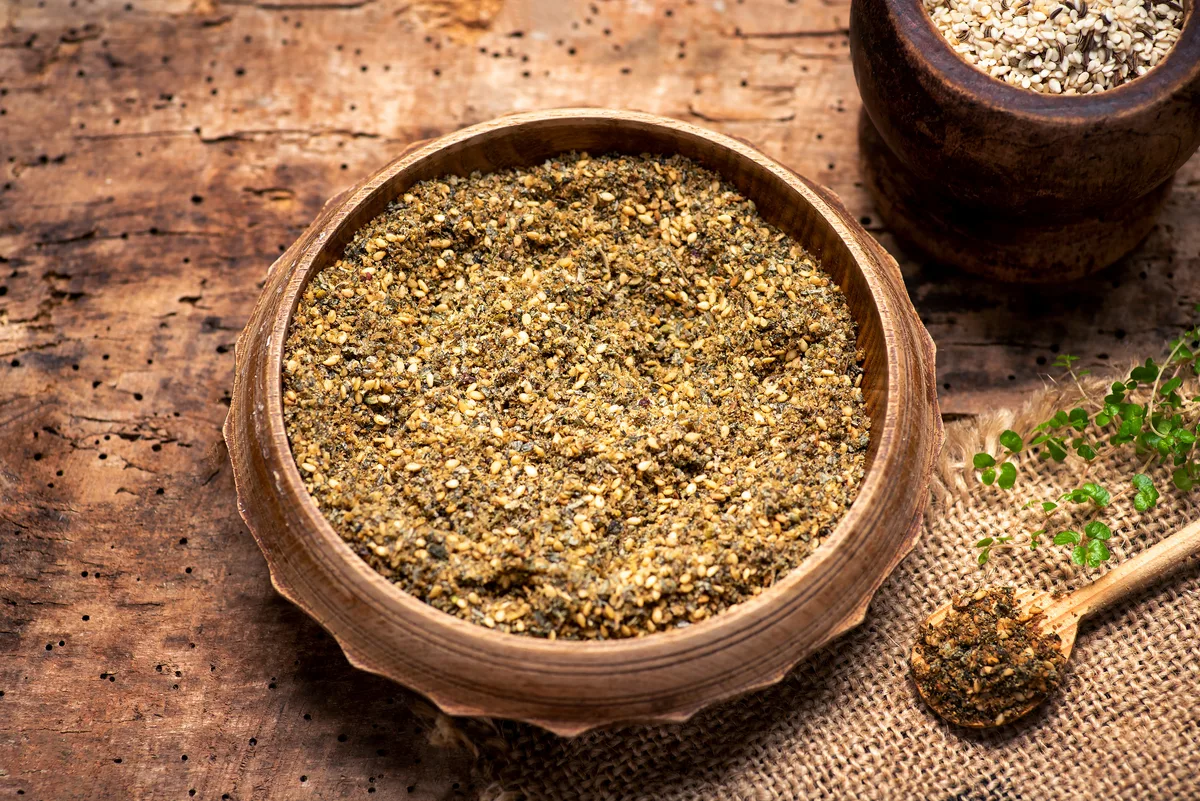
Green za'atar and red za'atar are the same family of blend built in different proportions: green leads with the herb itself for a bright, grassy profile, while red leans on sumac for a deeper colour and a sharper, fruitier sourness. We stock one of each — Green Jordanian Thyme and a Red Thyme (za'atar-style blend) in 500 g packs — both milled by AbdulRahim Mills in Jordan.
Neither is a "better" za'atar; they're built for different jobs. This guide breaks down what separates them, where each performs best, and how to decide whether one or both belong on your line or your shelf.
What makes a za'atar blend "green"
Green Jordanian Thyme is herb-forward: thyme leads, with sumac and toasted sesame present but supporting rather than dominant. It's listed as 100% natural and packed for retail. The colour is a true green rather than the brownish-khaki of an over-processed blend, and the aroma reads bright and grassy the moment the bag opens.
This is the style most at home on manakish, breakfast spreads, a labneh bowl or a green salad finish — anywhere the goal is to taste thyme first, with sourness and richness as a backdrop rather than the headline.
What makes a za'atar blend "red"
The Red Thyme (za'atar-style blend), 500 g, is a product of Jordan built with a heavier sumac share, giving it a deeper reddish-brown colour and a sharper, more assertive sourness than the green blend. Where green whispers, red states its case — it's the pick for dishes that need the blend to cut through richness rather than sit quietly underneath it.
That makes it a strong fit for roast chicken, grilled meats, fries and any grilling rub where you want a sour, savoury edge, and its bolder colour also reads well as a retail jar — it photographs and shelves more dramatically than the greener style. The 500 g pack size suits both a kitchen's working rotation and a retail facing without committing a buyer to a bulk sack before they know how the blend performs on their menu.
Side-by-side comparison
| Blend | Lead flavour | Colour | Best for | Heat level |
|---|---|---|---|---|
| Green Jordanian Thyme | Wild thyme, herb-forward | Bright green | Manakish, labneh, breakfast, salads | None — savoury and grassy, no chili |
| Red Thyme (za'atar-style blend), 500 g | Sumac-forward, sharper sour edge | Deep reddish-brown | Roast chicken, fries, grilling rubs, retail jars | None — sourness from sumac, not chili |
Matching the blend to your concept
- Bakeries and manakish shops: lead with Green Jordanian Thyme — it's the traditional flatbread topping and the one most Levantine customers expect by default.
- Shawarma and grill restaurants: the red blend's sumac edge cuts through fat on grilled meats and works well rubbed onto chicken before roasting.
- Grocers building a spice section: stock both, facing them together so the colour contrast does the selling — a customer can see the difference before reading a label.
- Cafés building a savoury pastry line: green suits a lighter breakfast pastry; red suits a bolder snack item like a za'atar-crusted flatbread chip.
Can you use them interchangeably, or blend the two?
Many operators stock both rather than picking a single style, using green where a gentler herb note suits the dish and red where the menu wants more punch. Blending the two by hand at the pass isn't necessary — each mill's ratio is already balanced — but some kitchens do combine them for a house-signature middle ground, and there's no reason not to experiment on a small batch before committing a full case.
For retail, displaying both side by side lets customers pick a lane the way they would compare mild and hot sauce — it's an easy way to double a facing without adding a genuinely new product line.
How to buy both
Both blends are quoted the same way as the rest of the catalogue: add the quantities you want to an inquiry alongside anything else from the za'atar category or the wider spice range, and one written quotation covers every line, typically within a business day. There are no list prices — the quotation is the price document. For the sourcing side in full, including formats and quality checks across the wider category, see wholesale za'atar in Canada.
There's no penalty for testing both on the same order — a mixed inquiry of green and red, plus sumac from the same mill, quotes as one line item on delivery even though it covers three separate SKUs, which makes it a low-friction way to trial the full za'atar shelf before committing to a single style long-term.
Related questions
Is red za'atar spicy?
No. The red colour and sharper edge come from sumac, not chili — there's no capsicum heat in either the green or the red blend.
Which za'atar is more traditional?
Both are legitimate regional styles rather than one being a deviation from the other — herb-forward and sumac-forward blends both have deep roots across the Levant. See za'atar by region for how the balance shifts by country.
Can I mix green and red za'atar?
Yes. Some kitchens blend the two on a small batch to land a house-signature middle ground between herb-forward and sumac-forward. Neither mill's ratio needs adjusting for food safety reasons — it's purely a taste call.
Which one should a first-time buyer start with?
If your menu or shelf can only fit one to start, Green Jordanian Thyme is the safer default — it's the style most associated with the classic manakish topping. Add the red blend once you know whether your concept calls for a sharper, sumac-forward edge.