Product Guides
Za'atar by region: how Palestinian, Jordanian, Syrian and Lebanese blends differ
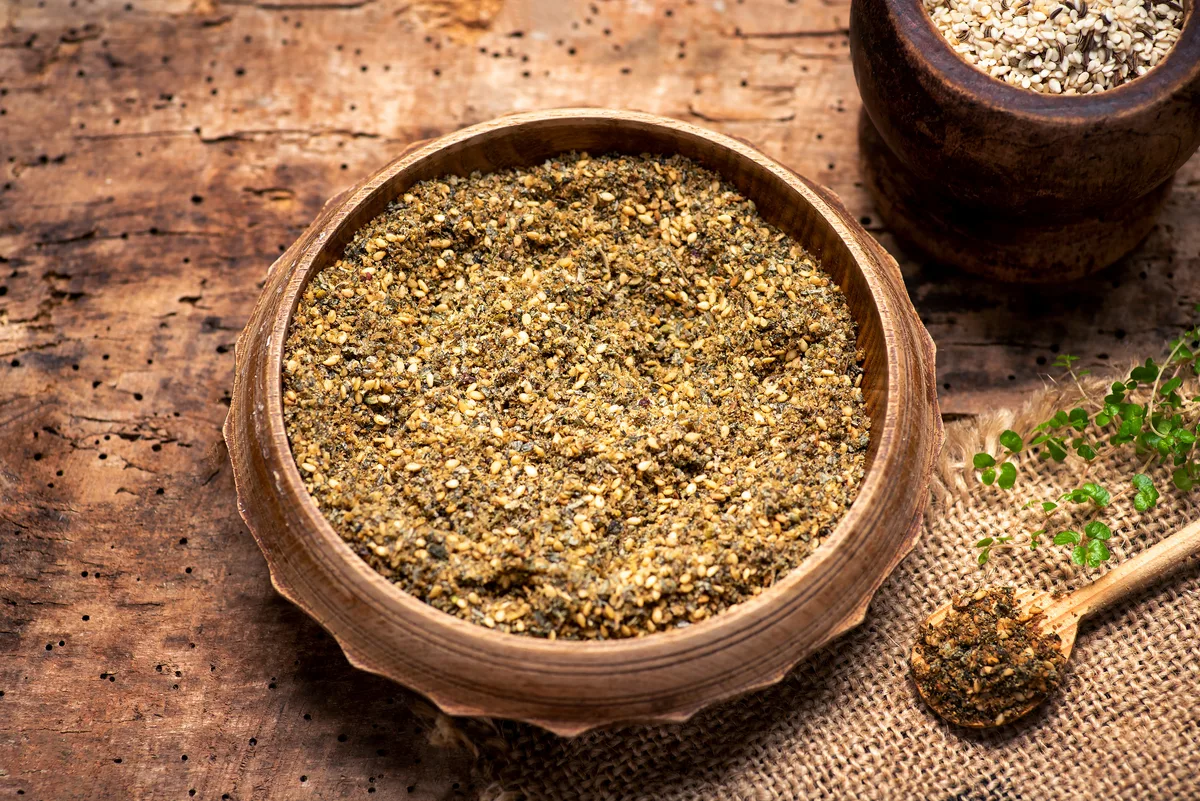
Za'atar changes character as you move across the Levant, and the differences buyers and cooks describe come down to three variables: how much of the blend is the herb itself versus the other ingredients, how heavily sumac features, and whether extra seeds get folded in alongside the sesame. Palestinian blends are widely described as herb-forward; Jordanian and Syrian blends are more often described as sumac-heavy with a deeper colour; Lebanese blends are closely tied to the version UNESCO recognized in 2023 as the topping on the flatbread man'ouché.
None of this is codified. Za'atar is a household and regional tradition carried by families and mills, not a fixed formula written down anywhere, so what follows are general tendencies reported by cooks, spice guides and the trade press — not a claim that every blend from a given country follows one recipe. This guide is about telling the styles apart, not prescribing a single "correct" one.
Why regional za'atar varies at all
Three things drive the variation. The herb itself: related wild thyme species carry different local names and grow slightly differently across the region's hillsides. Sumac: it's wild-harvested, so how much a household or mill folds into the mix has always been a matter of local taste rather than an industry standard. And extras: some blends stop at thyme, sumac, sesame and salt, while others fold in extra roasted seeds or a touch of additional spice for a house signature.
The result is that "za'atar" was never one product — it's a family of related blends that share a structure and diverge in balance. See what is za'atar for the base structure every style shares.
It's worth saying plainly what this variation is not: it isn't a quality hierarchy. A herb-forward Palestinian-leaning blend isn't more "correct" than a sumac-heavy Syrian one — they're built for different plates. Fattoush and fish lean on a sharper, sumac-forward blend; a manakish topping or a labneh bowl often favours the gentler, herb-forward end. Buyers who stock only one style are usually optimizing for one use case, not making a judgment about authenticity.
Palestinian za'atar: herb-forward tradition
Palestinian za'atar is the version most spice guides and forum discussions among cooks point to as the benchmark for a herb-forward blend — descriptions commonly emphasize the wild thyme itself, with sumac and sesame present but playing a supporting role rather than dominating the mix. Olive oil is brushed on separately at the point of use rather than blended in, which keeps the dry mix shelf-stable.
Jordanian za'atar: what we stock
Our two stocked lines are both milled by AbdulRahim Mills, a Jordanian house of Palestinian heritage, which is a useful reminder that these regional lines overlap far more than they diverge. Green Jordanian Thyme sits on the herb-forward end of the spectrum, closer to the Palestinian-leaning style described above; the Red Thyme (za'atar-style blend), 500 g, shifts the balance toward sumac for a deeper colour and a sharper sour edge. The full comparison of the two is in green vs. red za'atar.
Syrian and Lebanese styles: more sumac, more sesame
Syrian za'atar is commonly described in regional food writing as leaning further into sumac than Palestinian styles, producing a deeper red-brown colour and a sharper sourness. Lebanese za'atar is the tradition behind UNESCO's December 2023 inscription of al-man'ouché — thyme, sumac, toasted sesame, salt and olive oil, tied to the morning sobhiyé ritual of sharing the flatbread (UNESCO, 2023) — and is frequently noted for a generous toasted-sesame share, married with olive oil at the point of use.
| Style | Commonly described as | Typical pairing |
|---|---|---|
| Palestinian | Herb-forward; sumac and sesame supporting | Olive oil at point of use |
| Jordanian | Ranges from herb-forward to sumac-heavy by mill | Both styles stocked from one Jordanian house |
| Syrian | Sumac-heavy, deeper red-brown colour | Sharper sourness |
| Lebanese | Generous toasted sesame; the UNESCO-recognized man'ouché topping | Olive oil brushed on flatbread dough |
Buying regional style without guesswork
Because these are household and regional traditions rather than audited standards, the reliable way to buy a specific regional character is to ask the mill directly what balance a batch carries, and to buy from a named producer rather than a generic "za'atar" label. Our stocked lines are both Jordanian-milled; other regional grades — a more Palestinian-leaning herb-forward cut, or a Syrian sumac-heavy one — are sourced on request through our supplier houses rather than held as stock. Say so in your inquiry and the quotation will confirm what's available and when; see wholesale za'atar in Canada for how that sourcing process works end to end.
Related questions
Is Jordanian za'atar the same as Palestinian za'atar?
They overlap heavily — Jordanian milling houses, including the one we stock from, often work in the same herb-forward tradition commonly associated with Palestinian blends. The two are close cousins rather than opposites.
Which regional style is the most sumac-forward?
Syrian za'atar and our own red Jordanian blend are both commonly described as sumac-heavy, giving a deeper colour and sharper sourness than herb-forward styles.
Does Levant Direct stock regional za'atar beyond Jordan?
We currently stock two Jordanian-milled blends, one herb-forward and one sumac-forward. Other regional styles can be sourced on request through our supplier houses — note it in your inquiry.
Should a restaurant stock more than one regional style?
Many do. A herb-forward blend covers manakish, breakfast and labneh service, while a sumac-forward blend covers fattoush, grilling rubs and roast meats — stocking both rather than one all-purpose jar gives a kitchen the right tool for each dish.