Product Guides
Levant foods: what the region actually eats, and where to find every category
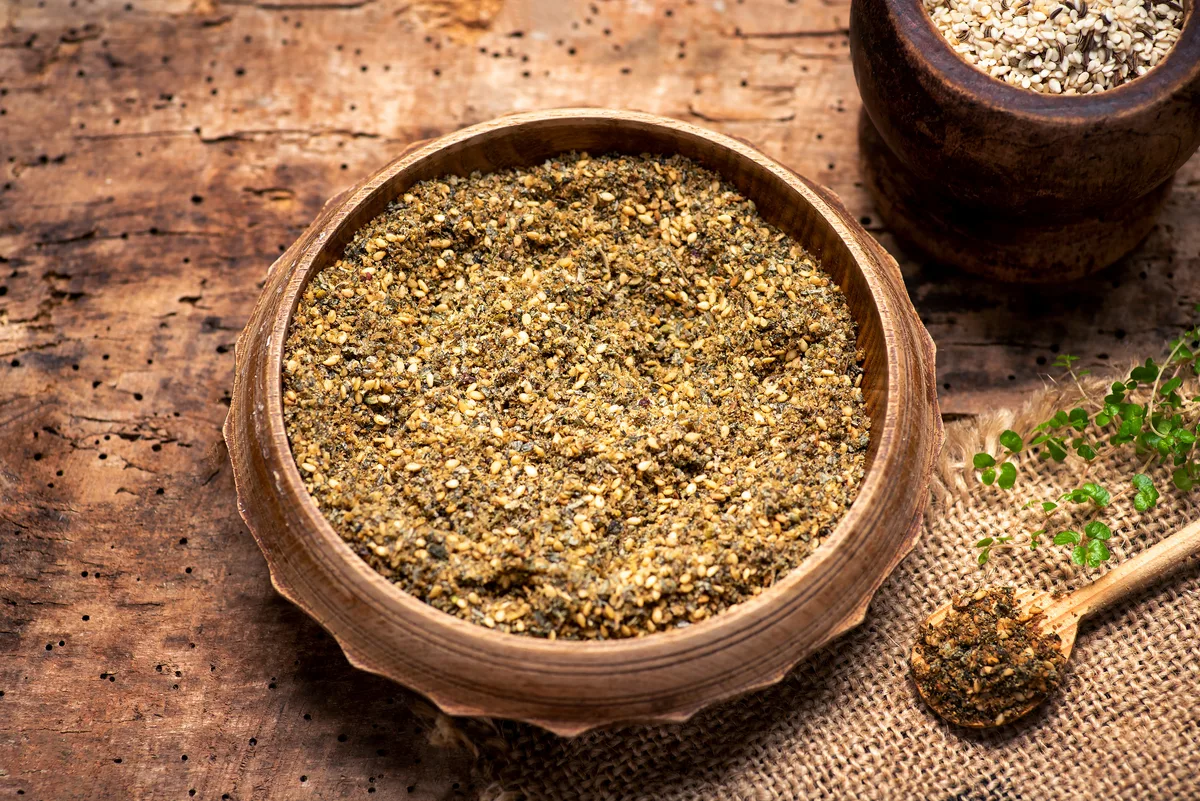
Levant foods are the shared kitchen of the eastern Mediterranean — Syria, Lebanon, Jordan and Palestine, historically overlapping with southeastern Türkiye and parts of Iraq — built on a working pantry rather than a single dish: za'atar and olive oil, tahini and sesame, cured olives, pomegranate molasses, dried herbs, and shelf-stable sweets built around dates, nuts and sesame. Za'atar spread over flatbread with oil, thyme and sesame, known as man'ouché, was inscribed by UNESCO in December 2023 as an emblematic Lebanese culinary practice — a fair emblem for the whole region's food.
Levant Direct takes its name from that region and imports the pantry that defines it, sourced from named producer houses across Jordan, Syria, Türkiye and Egypt. This guide is the starting point: what the Levant is, the food categories that define it, and where each one lives in our catalogue.
What 'the Levant' actually means
The Levant is a geographic and cultural region on the eastern shore of the Mediterranean — Syria, Lebanon, Jordan and Palestine at its core, with culinary traditions that extend naturally into neighbouring Gaziantep in southeastern Türkiye and parts of Iraq, where the same spice trade routes, the same olive and sesame agriculture, and centuries of shared history produced closely related food. Aleppo, in northern Syria, is the clearest example: its soap-making craft, built on olive and laurel oil for some 3,000 years, was carried by displaced makers to Gaziantep and continues there under the same family names and hand-stamped methods — recognized by UNESCO in December 2024 as intangible cultural heritage.
That's why a catalogue of Levant foods honestly includes producers based just outside the Levant's political borders: the tradition travelled with the people who carried it, and the pantry it produces is recognizably the same one.
The staples that define Levant foods
A handful of categories do the defining work. Za'atar — thyme, sumac, toasted sesame and salt, mixed with olive oil — is the single most identifiable Levantine product, eaten on bread daily rather than saved for occasions. Olive oil anchors the pantry as both fat and finishing ingredient. Tahini and its sweet cousin halawa turn sesame into two of the region's most exported foods. Sumac and dried herbs — mint, marjoram, sage, laurel — season a kitchen that leans on acidity and aromatics rather than heavy sauces. Pomegranate molasses, reduced from tart pomegranate juice, is the Levant's signature souring agent, classically found in muhammara.
Around that core sit the categories that make a full Levantine table: cured olives and canned preserves, sweets built on dates, nuts, semolina and sesame (ma'amoul, barazek, ghraybeh), cardamom-spiced coffee, and — outside the kitchen but firmly inside the tradition — Aleppo soap and traditional natural oils, both rooted in the same olive-and-herb agriculture that feeds the pantry.
Every Levant foods category, in one place
Our catalogue organizes around these categories directly, each drawn from a named producer house rather than a generic import line.
- Za'atar — Palestinian- and Jordanian-style thyme blends, the region's most identifiable product.
- Spices — whole and ground spices, shawarma blends, sumac and the working spice rack.
- Tahini & halawa — sesame pressed and turned into the region's defining sweet.
- Sweets & bakery — ma'amoul, barazek, ghraybeh and breadsticks from Damascus-tradition bakeries.
- Baking & desserts — dessert mixes and creams built for a working kitchen.
- Herbs & teas — mint, marjoram, sage, laurel leaf and Arabic gum.
- Beverages — cardamom-spiced ground coffee, the region's daily ritual.
- Olives & pickles — cured olives and capers from Syrian and Anatolian houses.
- Canned & preserves — tomato paste, artichoke, crushed pepper and truffles.
- Sauces & pastes — pomegranate molasses and tomato paste, the pantry's souring and base ingredients.
- Oils & ghee — premium virgin olive oil, the region's foundational fat.
- Pantry staples — almonds, instant soups and natural mastic chewing gum.
- Aleppo soap — laurel and olive-oil soap in the Aleppo craft tradition.
- Natural oils — traditional plant and seed oils used across the region for generations.
- Personal care — henna, hair oils and traditional preparations built on the same botanicals.
Where the region's foods extend beyond its borders
Two houses in our catalogue sit just outside the Levant proper and are worth naming honestly. Zer Group and Nader Barakat & Sons both manufacture in Gaziantep, Türkiye, a city whose food culture — olives, pomegranate sauce, laurel soap — grew directly out of Aleppo's displaced trade and craft. El Captain, our natural-oils and personal-care house, is based in Cairo, Egypt — geographically North Africa, not the Levant, but part of the same broader Arab botanical and herbal-oil tradition that Levantine households also draw on.
We list origin plainly on every product for exactly this reason: 'Levant foods' describes a living, connected food culture, not a strict map, and knowing precisely where something was made is more useful than a label that flattens the difference. For the full sourcing picture, see Levantine food supplier in Canada and Arabic grocery wholesale in Canada.
Related questions
What countries make up the Levant?
The Levant's core is Syria, Lebanon, Jordan and Palestine on the eastern Mediterranean, with culinary and cultural ties extending into southeastern Türkiye (notably Gaziantep, tied to Aleppo's trade and craft history) and parts of Iraq.
Is Turkish food the same as Levant food?
Not entirely, but there's real overlap in specific regions. Gaziantep in southeastern Türkiye shares deep culinary and craft ties with nearby Aleppo, Syria — our Türkiye-based suppliers make olives, pomegranate sauce and laurel soap that sit squarely in that shared tradition.
Is Egyptian food part of Levant food?
No — Egypt is geographically North Africa, distinct from the Levant. Our Egyptian supplier, El Captain, brings natural oils and traditional personal-care products that share a broader Arab herbal tradition with Levantine households, without being Levantine themselves.
What is Levant Direct?
Levant Direct is a Toronto-area wholesale import catalogue for the Levant's foods — spices, za'atar, olives, tahini and halawa, sweets, coffee, Aleppo soap and natural oils — sourced from ten named producer houses and quoted to GTA and Canadian buyers by the case.