For Restaurants & Cafés
Manakish bakery supplies: za'atar, oil and getting the portioning right
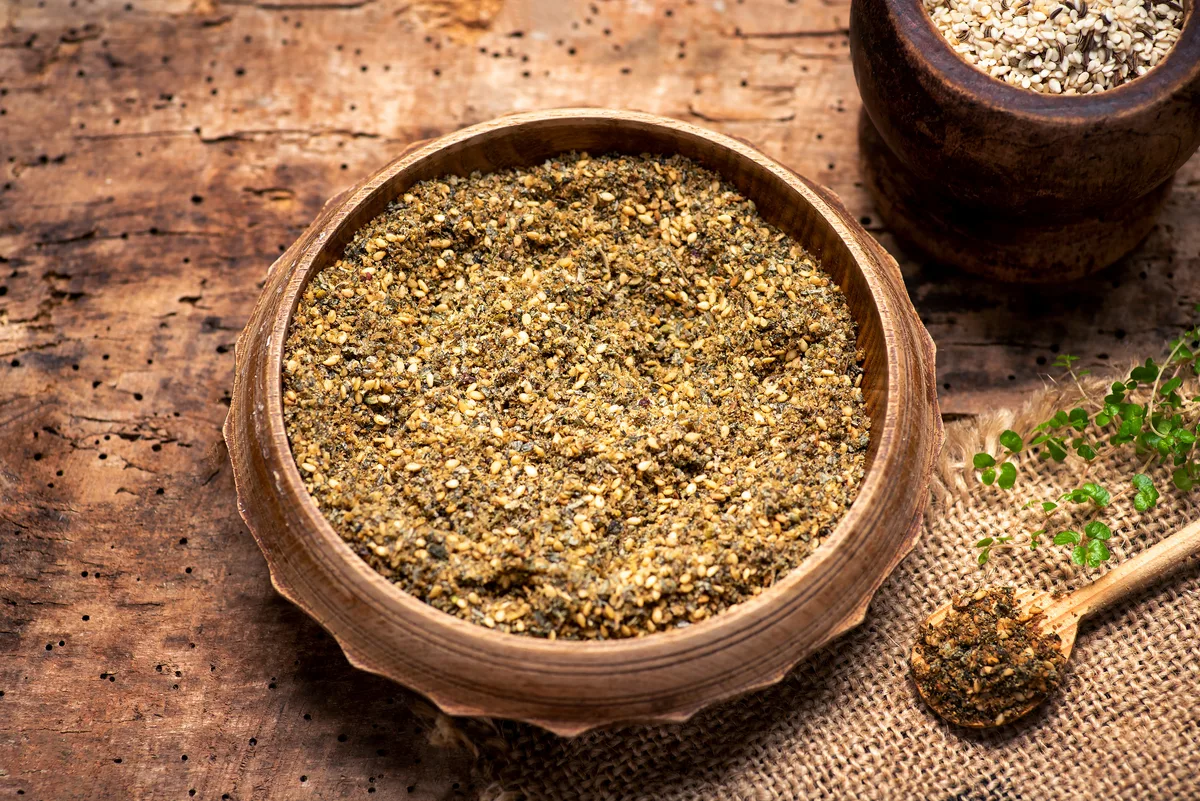
A manakish bakery's supply list is shorter than most people expect: dough is the bakery's own craft, but the topping that makes it manakish — za'atar mixed with olive oil, spread to the edge of a round of dough before it hits the oven — comes down to two ingredients a Levantine pantry supplier needs to get right. Za'atar and olive oil are exactly what Levant Direct stocks in case quantities, with the producer named on every jar.
This guide covers the za'atar grades worth stocking, how much oil a working bakery actually uses per flatbread, and why the dish itself now carries formal recognition as Levantine heritage.
Man'oushe is recognized heritage, not just a menu item
In December 2023, UNESCO inscribed "Al-Man'ouché, an emblematic culinary practice in Lebanon" on its Representative List of Intangible Cultural Heritage — formally describing it as flatbread topped with thyme, sumac, toasted sesame, salt and olive oil (that combination is za'atar), tied to the tradition of the morning sobhhiyé, or breakfast gathering (ich.unesco.org).
That inscription is a useful anchor for a bakery's own storytelling — it confirms that the topping ratio isn't arbitrary. Thyme, sumac and toasted sesame are the three components that make up za'atar as UNESCO describes it, and getting each one right is what separates a bakery's manakish from a flatbread with herbs sprinkled on top.
Choosing a za'atar grade for volume baking
We carry two za'atar-adjacent lines through AbdulRahim Mills: Green Jordanian Thyme, a thyme-forward blend with a sharper, more herbal profile, and Red Thyme (Za'atar-Style Blend), which leans into the sumac for a deeper red colour and tangier finish. Bakeries running high volume often stock both — green for a lighter, more thyme-dominant manakish and red where sumac's tartness is the point.
Sumac and sesame (hulled sesame, golden sesame) are also available separately if a bakery blends its own house za'atar rather than buying a pre-mixed one — useful for a bakery that wants a signature ratio distinct from what competitors carry. See our wholesale za'atar guide for a full grade-by-grade breakdown.
How much oil per flatbread — a working starting ratio
The trade convention most working bakeries land on is roughly equal parts za'atar and olive oil by volume — often described as about two tablespoons of each per round of dough — mixed just before spreading so the oil doesn't separate out and pool. That's a starting ratio to test against your own dough size and oven, not a fixed rule; thinner rounds need less topping per piece, thicker Jordanian-style manakish can take more.
Oil quality matters as much as quantity here, since it's carrying most of the topping's mouthfeel. A case of premium virgin olive oil gives a bakery a consistent base to test its own house ratio against, rather than one that shifts every time a generic-brand bottle changes supplier.
Portioning and waste control at volume
Once a bakery has settled on a ratio, the next problem is keeping it consistent across a busy shift — the same reason bulk formats matter. Mixing za'atar and oil in small batches close to service, rather than one large batch that sits and separates, keeps the topping's flavour and texture even from the first tray to the last. Portioning it by weight or a measured scoop rather than "by eye" is the difference between a bakery that tastes the same every visit and one that doesn't.
A single case of za'atar covers a meaningful run of manakish for a shelf-stable ingredient — pairing it in the same inquiry as oil, sesame and sumac keeps a bakery's whole topping program on one delivery.
Beyond manakish: the same topping on the rest of the menu
A bakery that dials in a za'atar-and-oil ratio for manakish usually finds uses for it elsewhere on the menu — brushed on fresh-baked flatbread as a side, folded into a labneh spread, or dusted over roasted vegetables and fries. That's worth planning for in your ordering, since it means the same case of za'atar and oil earns its keep across more than one menu line rather than sitting idle between manakish runs. See za'atar on the menu, beyond manakish for a fuller list of applications.
For a bakery just starting a manakish program, ordering a smaller trial case of both za'atar grades alongside the oil is a reasonable way to test which one your customers respond to before committing to a larger standing order. Keeping notes on which grade sells faster at which time of day — green tends to move at breakfast, red often holds its own through lunch — turns a first trial order into a data point for the next one, rather than a guess repeated indefinitely.
Related questions
What's the right za'atar-to-oil ratio for manakish?
Many working bakeries start from roughly equal parts by volume — about two tablespoons of each per round of dough — mixed just before spreading. Treat it as a starting point to adjust for your dough thickness and oven, not a fixed rule.
Does Levant Direct supply the dough or flour for manakish?
No — dough is a bakery's own craft and flour is outside our catalogue. We supply the topping side: za'atar, olive oil, sumac and sesame.
What's the difference between your two za'atar-style products?
Green Jordanian Thyme is thyme-forward with a sharper herbal profile; the Red Thyme blend leans into sumac for a deeper colour and tangier finish. Many bakeries stock both for different menu items.
Can I buy za'atar and olive oil in the same order?
Yes — add both to one inquiry and they quote and deliver together, which is how most manakish bakeries order from us.