For Restaurants & Cafés
Running a restaurant spice program: buying, storage and reorder discipline
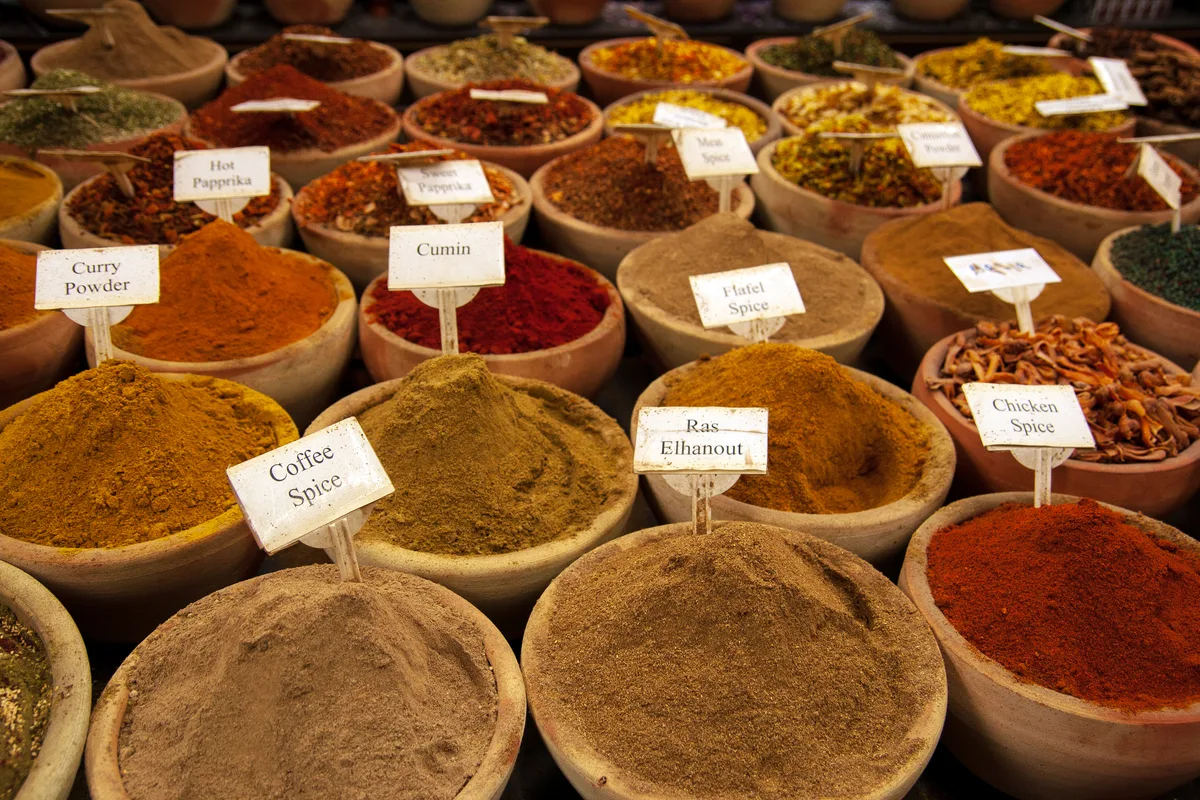
A restaurant spice program comes down to three disciplines: buy the right form (whole where freshness pays, pre-ground and pre-blended where consistency pays), store bulk stock away from the heat, light and steam of the line, and reorder on par levels instead of empty containers. Kitchens that run all three stop losing money to faded spices and panic buying.
Levantine kitchens lean on spices harder than most — a shawarma marinade or a kabsa pot is seasoning-forward by design — so the gap between a managed program and an ad-hoc shelf shows up directly on the plate. Here is the working version, from first order to reorder rhythm, built around the 53-spice range we import from AbdulRahim Mills in Jordan.
Whole, ground or blended: buy each where it wins
Whole spices hold their aroma far longer than ground, because grinding exposes the volatile oils that make a spice worth using. So buy whole where you grind or bloom to order — cardamom, cinnamon sticks, clove, black seed — and buy pre-ground where volume and speed matter more: ground cumin, coriander and allspice are workhorses you turn over fast enough that freshness is protected by usage, not by form.
Blends are the exception to the grind-your-own instinct. A chicken shawerma blend or a kabsa mix from a single mill gives every batch the same balance, which is the whole point of a signature marinade — milling in-house saves nothing if Tuesday's shawarma tastes different from Friday's. The chicken and beef shawerma blends are compared properly in our shawarma spice guide.
Storage: the line is the enemy
Heat, light, steam and open time are what kill spices — and a kitchen line supplies all four at once. The rule is simple: bulk stays sealed in dry storage, and the line gets small working containers refilled on a schedule.
- Decant, don't dip. Fill line containers from bulk in dry storage — never spoon from the bulk bag over a steaming pot. Moisture cakes ground spice and invites spoilage.
- Keep bulk cool, dark and sealed. Airtight containers, off the floor, away from the dish pit and the ovens.
- Date everything. Mark received-on dates and rotate first-in, first-out, the same as any shelf-stable FIFO rotation.
- Size working containers to a week. If a line container lasts a month, it is too big — you are aging spice on the hottest shelf in the building.
- Give the full storage setup ten minutes of thought once, then let habit run it — storing bulk spices in a restaurant covers containers, positioning and the shelf you should stop using.
Freshness windows: spices fade, they don't spoil
Dry spices don't become unsafe with age; they become pointless. Ground spices fade noticeably within months of opening, while whole spices hold useful aroma for a year or more. The test costs nothing: rub a pinch in your palm and smell it. If the sumac doesn't smell tart and bright, or the cumin doesn't hit the nose immediately, you are paying a full portion for half the flavour — and your cooks will compensate by over-portioning, which quietly doubles usage.
That is also the honest answer to whether 'expired' spices are safe: a best-before date on a dry spice marks flavour, not safety, provided it has stayed dry. Clumped, damp or off-smelling spice is a storage failure rather than an age problem — discard it and fix the container.
Par levels and the reorder rhythm
Count usage over two normal weeks and set pars at roughly double — enough cover to ride out a busy weekend, not so much that stock ages on your shelf instead of the supplier's.
| Tier | Examples | Working container | Reorder trigger |
|---|---|---|---|
| High-turn blends | Shawerma blends, kabsa, mixed spices | Refilled weekly on the line | Dry-store stock hits two weeks of cover |
| Daily singles | Cumin, coriander, black pepper, sumac | Refilled weekly | Two weeks of cover |
| Slow movers | Mahlab, kolenjan, lumi, safflower | Smallest container, refilled monthly | One spare unit left on the shelf |
Reordering without the 4 p.m. supplier run
Put reorders on a calendar, not a crisis. Quote-based ordering suits the rhythm: keep your full spice list saved, adjust quantities to your pars, and send the inquiry — the quotation comes back within about a business day, and reorders repeat the same list with two minutes of editing.
Buying bulk Levantine spices for a Toronto kitchen through one inquiry also consolidates lines you would otherwise chase across three suppliers — singles, blends and the za'atar and herb rack land on one delivery, which is one receiving slot and one set of date labels instead of three.
Related questions
How long do ground spices last in a commercial kitchen?
Expect noticeable fading within a few months of opening for ground spices, and a year or more of useful life for whole ones — faster if they live near heat and steam. Judge by aroma, not the calendar: rub a pinch and smell it before you write a spice off or double a recipe.
Is it safe to use spices past their best-before date?
Dry, properly stored spices past best-before are a flavour problem, not a safety one — they fade rather than spoil. Anything clumped, damp or off-smelling has taken on moisture and should be discarded.
Should we grind our own shawarma blend?
Only if consistency is someone's actual job. A milled blend from one producer keeps the balance identical across batches and cooks; most operators reserve in-house grinding for finishing touches, not the signature marinade.
What pack sizes should a small kitchen order?
Order the smallest bulk format that covers four to six weeks at your pars. Heavy users can take sumac in bulk, while slow movers belong in the smallest pack offered — state your usage in the inquiry and the case options come back on the quotation.