For Restaurants & Cafés
Olives in Jars vs Tins: Formats for Foodservice
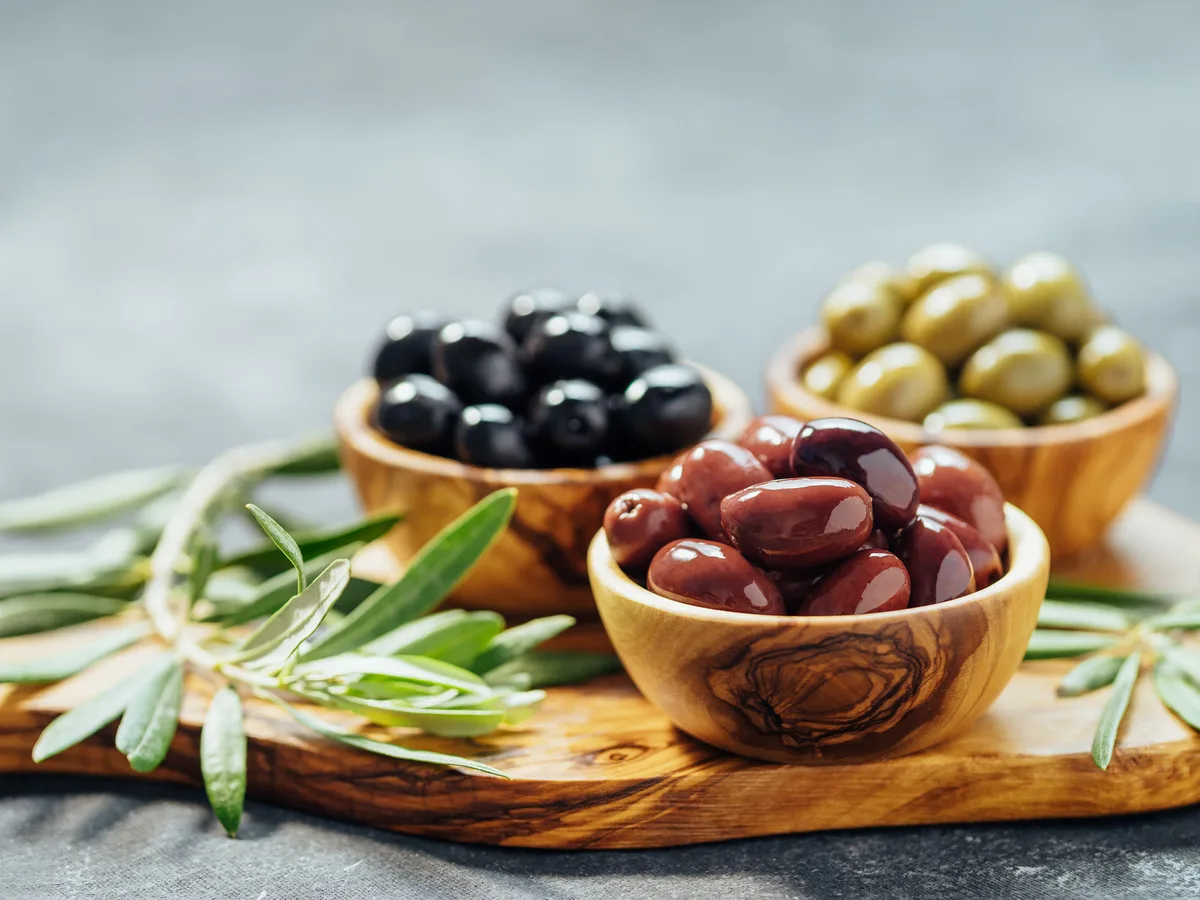
Glass reseals for a kitchen drawing from the same container across several services; tin ships lighter, stacks denser and scales to the largest catering formats we carry. The decision isn't the same for every line, though — not every olive in our catalogue actually ships in both containers, so the format choice sometimes isn't a choice at all. This page covers which lines genuinely offer glass and tin side by side, which don't, and the reseal-versus-density economics behind picking one over the other.
We're not duplicating our tomato paste: glass vs tin comparison here — this page is olives specifically, across Zer's Sliced Black Olives, Zer's Light Black Olives, and Lio's Green Olives Salkini.
Not every line offers both containers
This is the fact worth knowing before you assume the format decision is open on every line: some of our olive lines ship in glass and tin both, and one ships in glass only.
| Line | Glass | Tin | Sizes |
|---|---|---|---|
| Zer Sliced Black Olives | Yes — 370 cc (x12) | Yes — 1/2 (x24), 1/1 (x12) | Both formats stocked |
| Zer Light Black Olives | No | Yes — 1/2 (x24), 1/1 (x12), 5/1 catering (x4) | Tin only, up to a large catering format |
| Lio Green Olives Salkini | Yes — 1300 g (x6), 2900 g (x4) | No | Glass only |
Why the glass jar earns its cost
A resealable jar makes sense wherever a kitchen draws down an open container across more than one service — a salad station portioning slowly, or a deli case where the jar itself sits on display and a customer can see the product before buying. Zer's Sliced Black Olives is the one line here built to let you choose glass specifically for that reason; Lio's Salkini ships glass-only, so a buyer choosing it is choosing the reseal-and-display format by default, not selecting it over a tin alternative that doesn't exist for this line.
Glass costs more per unit of olive than tin, which only pays off if the reseal actually gets used — a kitchen that opens a jar and empties it in one service isn't getting anything for the extra cost that a tin wouldn't have delivered just as well.
Where tin's density and scale win
Tin's advantage is straightforward: it's lighter and denser per case, and it's the only container that scales to Zer Light Black Olives' large 5/1 catering format — a size with no glass equivalent in our range. A kitchen or catering operation committing a full container to a single day's or single event's service has no reseal need in the first place, which makes tin's cost and shipping efficiency a clean win with no real trade-off.
For a kitchen unsure which scale it needs, our largest catering-format olives covers exactly this large-format tin against Lio's largest glass jar side by side, if volume rather than container type is the real question.
Matching format to your kitchen's draw
The mistake to avoid isn't choosing tin over glass or the reverse — it's choosing a large format in either container that your kitchen doesn't turn over fast enough to use before quality slips. A pizza or salad line running high volume daily can justify the largest tin on offer; a smaller kitchen using olives occasionally is better served by Zer's Sliced Black Olives in its smaller half-tin or resealable glass jar, even if the per-unit cost looks less efficient on paper.
It's also worth checking format against delivery frequency rather than assuming a bigger container always saves a trip — a kitchen on a weekly delivery schedule has less reason to commit to the largest tin than one restocking monthly, since the smaller formats simply get reordered more often instead of sitting open and drawn down slowly.
Ordering by format
Add the specific format and case count you need to an inquiry — glass, half-tin, full tin or the large catering tin, whichever line supports it — alongside anything else from the olives and pickles range, and a single written quotation covers everything, typically within a business day.
Related questions
Do all your olives come in both jars and tins?
No. Zer Sliced Black Olives offers both glass and tin. Zer Light Black Olives is tin only, up to a large 5/1 catering format. Lio Green Olives Salkini is glass only. Check the specific line before assuming both formats exist.
Which format is better for a working kitchen?
Neither is universally better — glass reseals for a kitchen drawing from a container across several services; tin is lighter, denser and scales to the largest catering sizes. Match the format to how fast your kitchen actually turns the container over.
What's the largest tin format you carry?
Zer Light Black Olives in a 5/1 catering tin, case of 4 — the largest single-container format in our olives range, with no direct glass equivalent.